
Last updated November 14, 2026
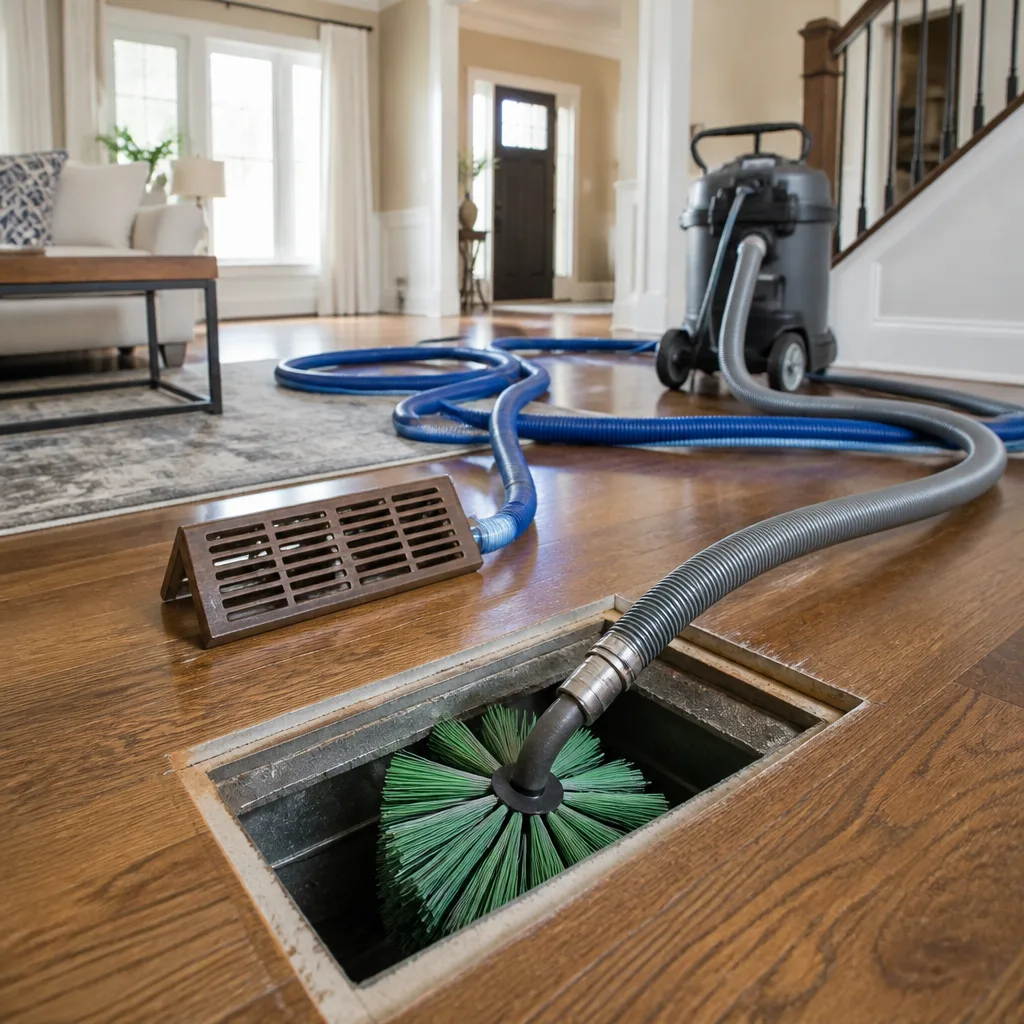 Whole-home duct cleaning
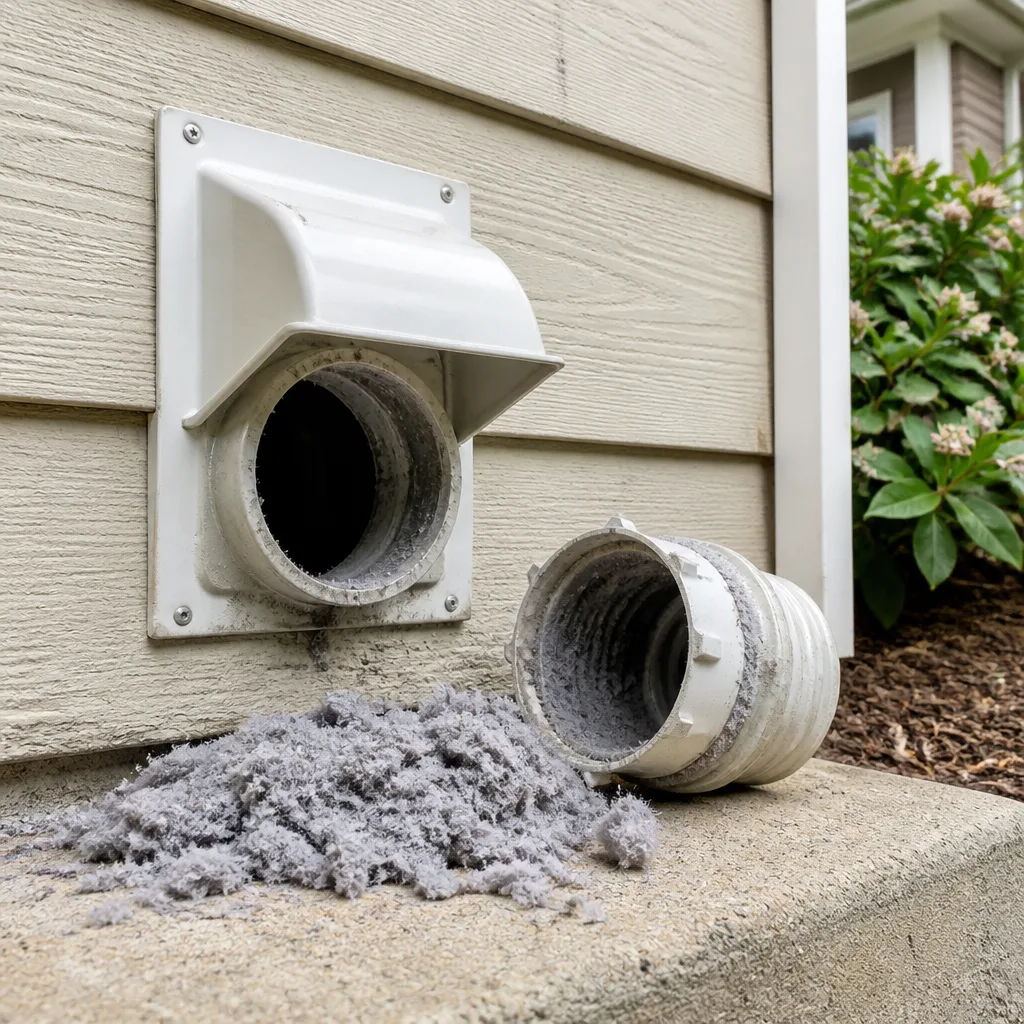 Dryer vent cleaning
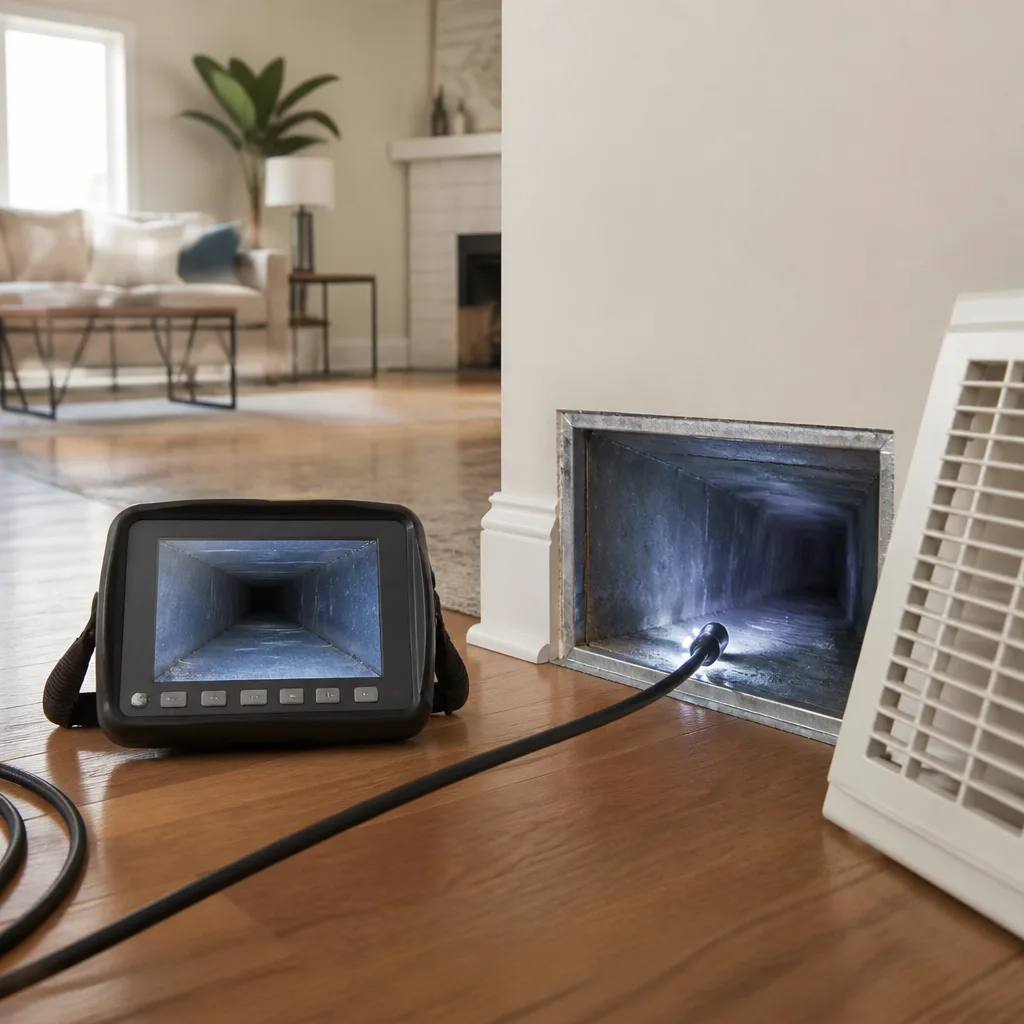 Camera inspection
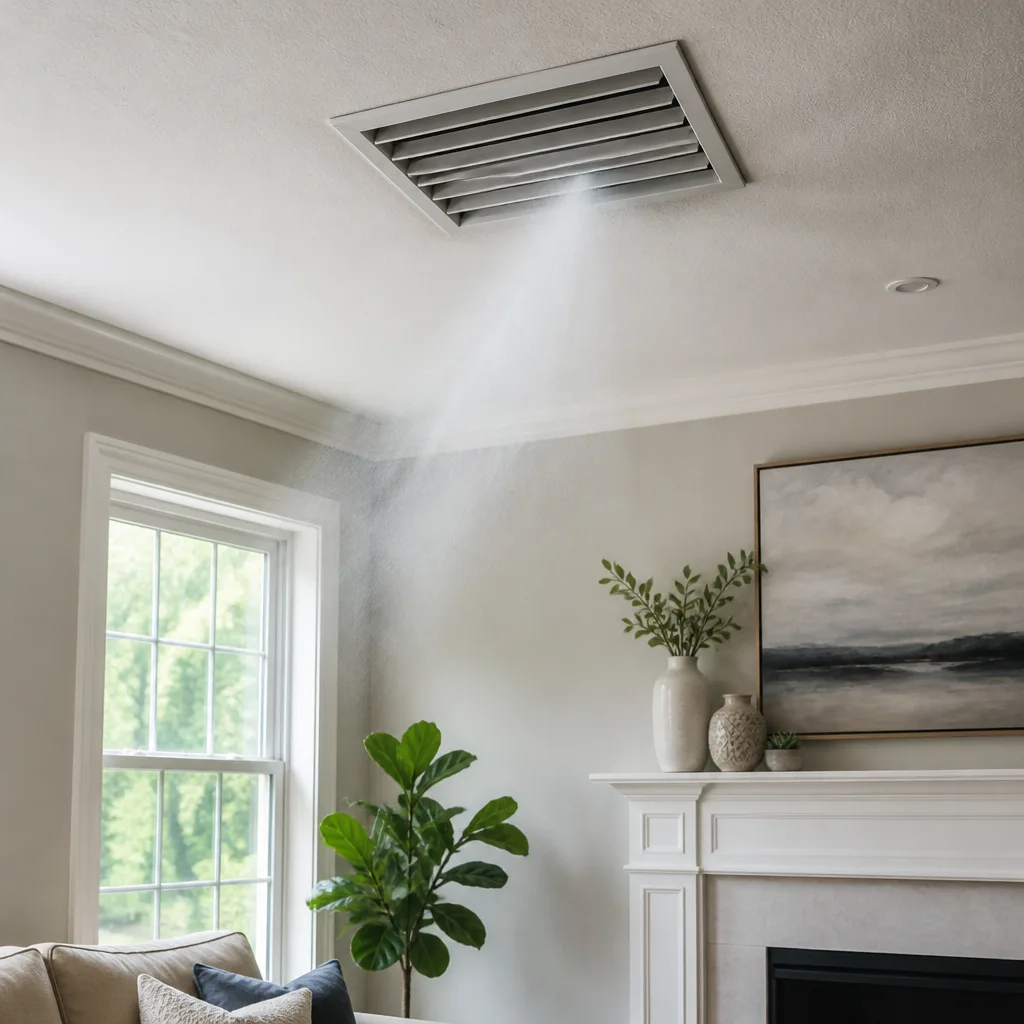 Sanitizing & deodorizing
Whole-system duct and dryer vent check with before-and-after photos - you see exactly what came out of your vents
That "$99 whole-house special" is a bait ad - the real number appears once they are in your hallway, or the "clean" is a shop-vac at the register. We photograph the inside of your ducts before and after instead.
Air Duct Cleaning Maintenance Checklist for Winston-Salem Homeowners
The filter is the last line of defense, not the first. By the time your filter looks dirty, contaminants have already been circulating through the duct interior for weeks, coating the blower wheel and settling along runs you’ll never see through a return grille. A duct system that moves air through every room needs an inspection rhythm tied to how your HVAC actually runs through a Piedmont year, not a single spring cleaning. This guide gives Winston-Salem homeowners a zone-by-zone checklist: what to look at monthly, what to do twice a year, and what deserves professional attention every three to five years.
Quick Answer
A practical air duct maintenance checklist for a Winston-Salem home has three tiers: monthly filter checks and register observations, semi-annual inspections of the supply and return system plus the air handler cabinet, and professional mechanical cleaning every three to five years, or sooner after major renovations or noticeable debris at the vents. Call a professional when you see visible dust buildup, persistent musty odors, uneven airflow between rooms, or any sign of moisture inside flex duct.
Styles & brands we work with
- Whole-home duct cleaning
- Dryer vent cleaning
- Camera inspection
- Sanitizing & deodorizing
Table of Contents
- Why Duct Maintenance Works on a Cycle, Not a Calendar Mood
- Monthly Checklist: The Cheap, High-Value Tasks
- Semi-Annual Checklist: Supply, Return, and Air Handler
- The 3-to-5 Year Checklist: When Professional Cleaning Belongs
- How to Do a Homeowner Inspection With a Flashlight and Phone Camera
- Winston-Salem Triggers: Renovations, Pollen, and Summer Condensation
- Ductwork in Crawl Spaces and Older Forsyth County Homes
- What to Document Between Professional Cleanings
Why Duct Maintenance Works on a Cycle, Not a Calendar Mood
Most homeowners think about duct cleaning the way they think about changing a smoke detector battery: once a year, roughly, when they remember. That’s the wrong frame. Your duct system is running infrastructure. It moves air every time the blower kicks on, which in Winston-Salem can mean months of steady heat-pump use in summer followed by months of heating season, with temperate gaps where the system runs lightly. Debris accumulates along the same cycle the system operates on, and it accumulates fastest in the places air moves slowest: the far ends of runs, the horizontal stretches in the attic or crawl space, and the return plenum where everything reconverges.
Breaking maintenance into tiers makes the work manageable. The monthly tier costs you a filter and a few minutes. The semi-annual tier is a visual inspection you can do with a flashlight and a phone. The multi-year tier is the professional mechanical cleaning, the kind that requires commercial-grade equipment to do correctly. If you want the broader picture of what a full duct system cleaning involves, the air duct cleaning page walks through the process from register to air handler.
What separates a useful checklist from a wasted afternoon is knowing which tier you’re in. A homeowner scrubbing the inside of a supply boot with a rag is doing no real harm, but no real good either. A homeowner who skips the air handler cabinet entirely for five years is missing the single most important part of the system. The tiers below are ordered by cost-to-benefit, not by how dramatic they sound.
Monthly Checklist: The Cheap, High-Value Tasks
Monthly tasks are the ones that prevent 80% of the problems that turn into a repair call. None of them take more than ten minutes if you know what to look at.
- Check the filter, don’t just replace it. Hold it up to the light. If you can’t see through the fibers, replace it. If your system is pulling from a high-MERV filter in a dusty house, expect to change it every 30 to 45 days, not 90. More restrictive filters catch more, but they load faster.
- Look at every supply register. Run your finger along the inside of the grille. A fine film of dust is normal. A fuzzy, felt-like coating or a visible dust streamer means the duct interior needs attention.
- Listen at the return grille. A whistling or choking sound can mean a blocked, crushed, or disconnected run. Anything that sounds different from the last month deserves a note.
- Smell for mustiness when the system kicks on. A musty smell that appears only when the blower runs usually traces to the duct interior or the air handler cabinet, not to the room.
- Wipe one register with a white cloth and check the color. Gray is normal. Gray-black or yellow-brown film often means you’re pulling debris from a source with a moisture component.
Keep a small notebook or a notes app entry for what you see each month. In our experience, that record becomes the single most useful thing a technician can look at when the eventual cleaning visit is scheduled. A homeowner who can say “the middle bedroom has smelled musty since the system kicked on back in June” saves an hour of diagnosis. If you’re in a Winston-Salem house with a high-efficiency system and a sealed cabinet, monthly observation is the only way to catch a small issue before it gets into the blower wheel.
Semi-Annual Checklist: Supply, Return, and Air Handler
Twice a year, in a warm month and in a cold month, do a more deliberate walkthrough of all three system zones. The supply side is the network of ducts pushing conditioned air into rooms. The return side pulls air back. The air handler cabinet holds the blower and often the evaporator coil. Each zone has its own usual failure points.
Supply-side inspection
- Remove a few supply grilles (they usually pop off with a light pull or two screws) and look in with a flashlight. Clean, shiny interior is ideal. Streaking, debris piles at the lowest point of the run, or liner delamination means the run needs a professional look.
- Check that all grilles are clear of furniture, curtains, and carpet edges. A blocked register pushes the whole system out of balance.
- Feel airflow at each register with your hand. Note any rooms that feel notably weaker. Uneven flow is one of the earliest signs of a partially collapsed run or a leaking joint.
- Look for dust streaks around the grille frame where air leaks past a poor seal. A gap around a supply boot is a small energy loss and a dust path.
Return-side inspection
- The return grille is your biggest dust filter after the HVAC filter itself. If it’s coated, expect the return trunk to be coated too.
- Check that the filter fits the slot properly with no bypass gaps. Air sneaking around a poorly sized filter carries debris straight past the filtration stage.
- Listen for rattle or suction noise at the return. That’s often a sign of a restricted filter or a blocked run.
Air handler cabinet
- With the system off and the breaker to the air handler flipped, look at the surfaces inside the cabinet around the blower. A light even film of dust is normal. Heavy buildup on the blower blades is not, and it usually indicates the ductwork is passing more debris than the filter is catching.
- Check for any sign of moisture: water staining, rust on fasteners, or a musty smell that gets stronger when you open the cabinet panel. Moisture inside a cabinet is a call-a-professional signal, not a DIY fix.
- Look at the evaporator coil if it’s visible. Dust buildup on the coil fins costs efficiency and can lead to freezing in summer.
If the air handler work at any point involves getting near the electrical panel or wiring, stop and call a qualified HVAC technician. Electrical panels and HVAC electrical connections are a real shock and fire hazard. That work belongs to a licensed electrician or HVAC tech, not a homeowner. We flag this every time because it’s the single most dangerous item on the semi-annual list.
The 3-to-5 Year Checklist: When Professional Cleaning Belongs
Every three to five years, most homes in the Piedmont benefit from a mechanical duct cleaning. Not because a mirror will show dust (it will, in almost any home), but because a mechanical cleaning resets the system to a known baseline and reveals what the monthly and semi-annual inspections can’t uncover. Shorten that interval if:
- You’ve done a major renovation in the past 12 months (drywall dust is relentless and travels through every run).
- You’re seeing visible debris at more than one register.
- One or more rooms has persistent musty odor when the system runs.
- Someone in the household has dust sensitivities or respiratory concerns.
- You’ve bought a home, especially a resale, and don’t have records of prior duct cleaning.
- You added a pet, moved into a home with pets, or changed filtration strategy.
The professional side of this checklist involves equipment that homeowners can’t replicate: rotary brush systems that mechanically agitate duct walls, high-powered negative-air extraction, and containment for contamination-sensitive situations. Our company uses Rotobrush cleaning systems, Nikro equipment, and Abatement Technologies equipment for jobs that need controlled air pressure. The same tools are used in commercial and industrial HVAC work because consumer vacuums and shop vacs simply don’t move the volume of air or provide the mechanical agitation that a duct interior requires.
Pair cleaning with a look at filtration and humidification. We work with Honeywell and Aprilaire air quality products, which lets us connect the cleaning visit to a longer-term filtration plan rather than treating it as a one-time event. For homes in Winston-Salem with older ductwork, that holistic view of the system matters more than any single cleaning.
How to Do a Homeowner Inspection With a Flashlight and Phone Camera
You don’t need a borescope to do a useful inspection. A phone camera and a household flashlight cover most of what a homeowner should see. Here’s the sequence we recommend:
- Start at the furthest supply register from the air handler. Remove the grille, point the flashlight into the run, and take a photo. The far end of a run is where debris collects first.
- Use your phone’s flash and record a 15-second video walking the flashlight beam down the inside of the run. Pause at any visible joint or fitting. Video catches streaking and debris piles that a still image can blur past.
- Inspect one return grille interior the same way. Returns carry a higher dust load than supplies, so this is where you’ll see the clearest picture of what’s in the system.
- Take a photo of the filter before you change it. This gives you a record of seasonal dust load and helps spot changes after renovation or a pet addition.
- Photograph any register where airflow feels weak, with a note of the room name. A technician can map your observations to the system layout quickly.
What you’re looking for in the photos: clean surfaces with light dust film (normal); streaking or dust trails (borderline, worth documenting); debris piles, fuzzy coating, or anything that looks wet (call a professional); visible mold-like growth or a persistent musty smell that won’t clear (call immediately). If your camera shows what looks like condensation or moisture streaks inside flex duct, don’t wait for the next cycle.
This inspection takes 20 minutes and gives you a real diagnostic picture instead of a vague sense that something’s off. It also gives the technician who eventually visits something to react to, which almost always means a faster, more accurate visit.
Winston-Salem Triggers: Renovations, Pollen, and Summer Condensation
Winston-Salem’s climate has three pressures that show up repeatedly in our duct work: spring pollen, summer humidity, and renovation dust. Each creates its own problem pattern, and each has a place in the checklist.
Pollen surges in spring
Winston-Salem sits in a region where pine, oak, and other tree pollen arrive in heavy waves from late March into May. The pollen load is temporary but intense, and it drives higher filter loading for weeks. During pollen season, check your filter every two to three weeks, not monthly. If you notice a fine yellow-green film at the return grille, that’s pollen accumulation and it’s a signal to shorten the filter interval immediately and to be more attentive at the register check.
Post-renovation debris
Any renovation that involves drywall, cutting, or sanding puts fine dust into the air for weeks after the visible mess is gone. That dust travels through return runs and settles in the air handler and across the supply system. If you’ve renovated in the past 12 months, add a professional inspection to the checklist even if the calendar says you’re not due. Drywall dust is abrasive and fine, and it sticks to blower blades in a way ordinary house dust doesn’t.
Summer condensation inside flex duct
Flex duct runs in an unconditioned attic see hot, humid air on the outside and cold conditioned air on the inside. If a run has a compromised vapor barrier, condensation forms on the outside of the inner duct and collects inside the insulation, which is a setup for mold growth before you see any visible signs inside the duct. A monthly check for moisture streaks or musty odor during high-humidity months is worth the ten minutes. If you see or smell it, don’t run the system until a technician looks at it.
For a fuller picture of what a professional visit involves, our Delmar Air Duct Cleaning pages cover the whole-service arc, from register inspection through repair.
Ductwork in Crawl Spaces and Older Forsyth County Homes
A lot of older housing stock around Winston-Salem and the surrounding Forsyth County neighborhoods has ductwork in a crawl space or a low attic rather than a conditioned interior chase. That layout creates a few checklist items that don’t apply to newer sealed systems.
- Look for disconnected runs after any crawl space or attic work. Plumbers, electricians, and pest control technicians all work in the same space, and flex duct sections get bumped and pulled. A quick visual check of every connection after any crawl space visit is a habit worth building.
- Check flex duct insulation for damage. Squirrels, mice, and time all take a toll. Torn insulation becomes a condensation problem, not just a heat-loss problem.
- Watch for standing water or damp ground near ducts. A crawl space with poor drainage keeps the duct jacket damp year-round, which is a long-term mold risk even if you don’t smell it today.
- Check the belly of horizontal runs for debris accumulation. Gravity pulls dust to the lowest point. On older duct systems, that’s often where the first visible debris pile forms.
- Snap a photo of the crawl space duct layout once a year. This gives you a reference to compare against after any contractor visit or seasonal change.
Older metal duct systems deserve their own note: they were often installed with fewer supports than modern standards require, and joints loosen over time. That’s one reason our team keeps air duct cleaning in Winston-Salem paired with repair capability, so a cleaning visit reveals and addresses joint repairs in the same appointment. If you’re in a home built before the mid-1990s, treat a cleaning visit as a chance to also diagnose the duct layout, not just wash the interior.
What to Document Between Professional Cleanings
The best diagnostic tool a technician can have is a homeowner with a record. Five categories are worth tracking between professional cleanings:
- Odors. When they appear, which rooms, and whether the smell shows up only when the blower runs or all the time. Musty is different from dusty, and both are different from a smell that’s only in one room.
- Visible dust at registers. Note when it appeared and whether it’s a light film or a felt-like layer. Photographs beat memory here.
- Uneven airflow. Which rooms feel weaker, and whether the weakness is steady or changes with the weather or the season.
- Moisture signs. Any streaks at a register, any film on the inside of a return grille, any musty odor after rain.
- HVAC behavior. Longer run times, short cycling, a system that struggles to cool on the hottest Winston-Salem days. These are often related to duct issues even when the root cause is elsewhere.
Add a professional cleaning date log if you’ve had the system cleaned before. When the next technician visits, that log tells them how long it’s been and what the last clean included. If your home has a Honeywell or Aprilaire air cleaner, log filter changes and settings alongside the duct notes; the two systems work together, and the maintenance history is easier to read in one place.
Common Mistakes to Avoid
- Treating the filter as the whole plan. A clean filter protects the air handler, not the ducts. The blower wheel and duct walls still accumulate debris that the filter never sees.
- Skipping the air handler cabinet during inspection. The cabinet is the most important inspection zone, and it’s the easiest to ignore because it requires taking a panel off.
- Judging duct condition by how the register looks. Cosmetic dust at a grille is normal. The kind of buildup that matters is on the far end of a run, not the visible face of the register.
- Cleaning ductwork after renovation without changing filters first. The filter catches more in the weeks after renovation and fills fast. Change it early or the system passes extra dust straight through.
- Assuming new construction has clean ducts. A Winston-Salem new-build often carries construction debris through the duct runs through its first year. A first-anniversary cleaning is worth considering.
- Ignoring flex duct moisture in summer. Visible moisture inside or outside a flex run is a red flag that should shorten the inspection cycle to days, not months.
- Skipping the dryer vent entirely. The dryer vent cleaning service exists because a clogged dryer vent is one of the most overlooked fire risks in any home, and it doesn’t appear on any duct inspection list.
See the difference
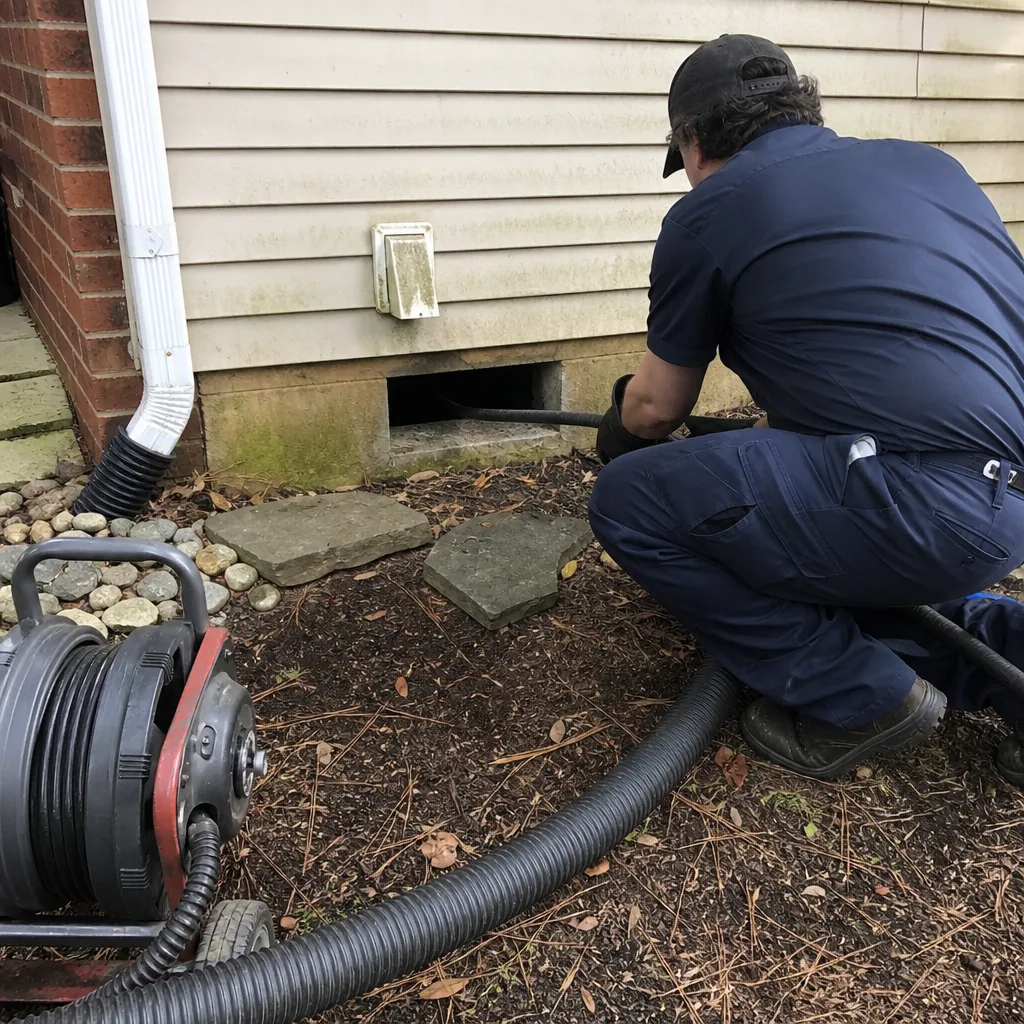 Before
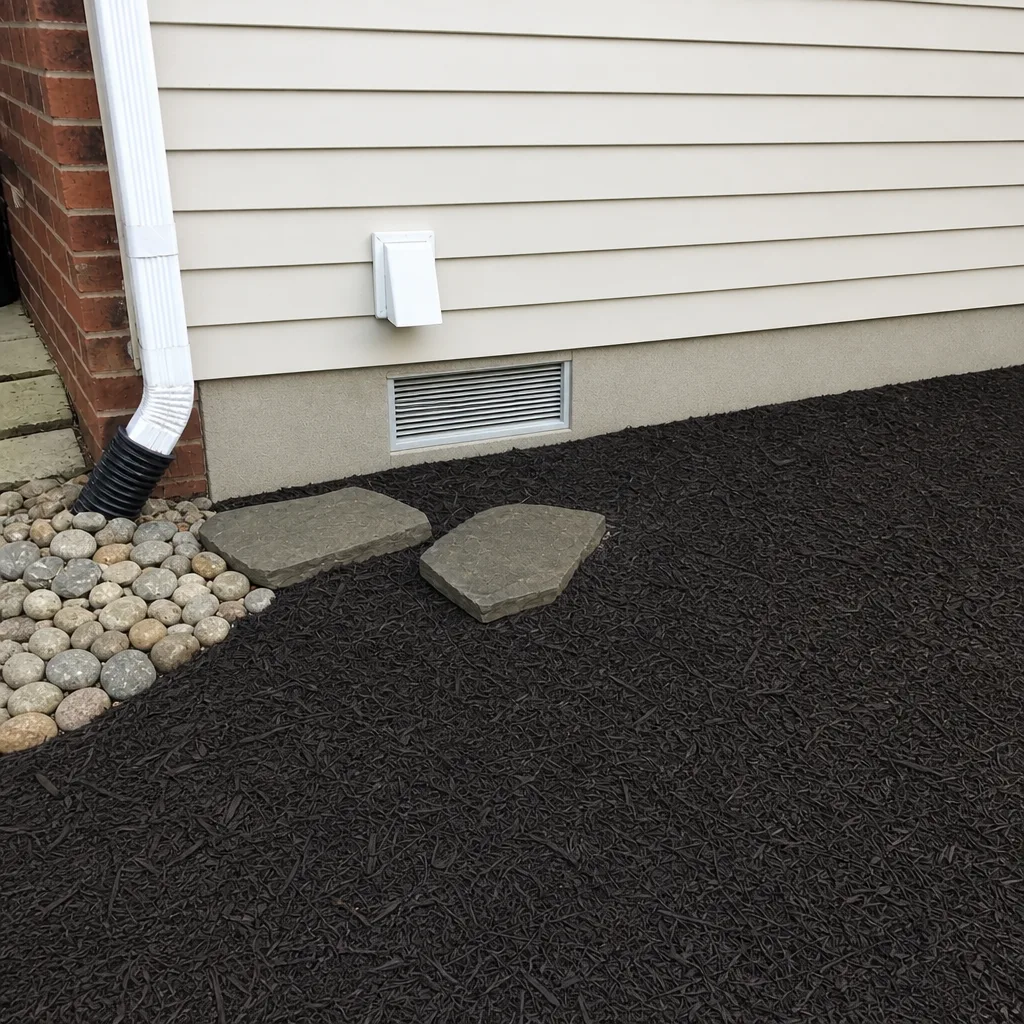 After
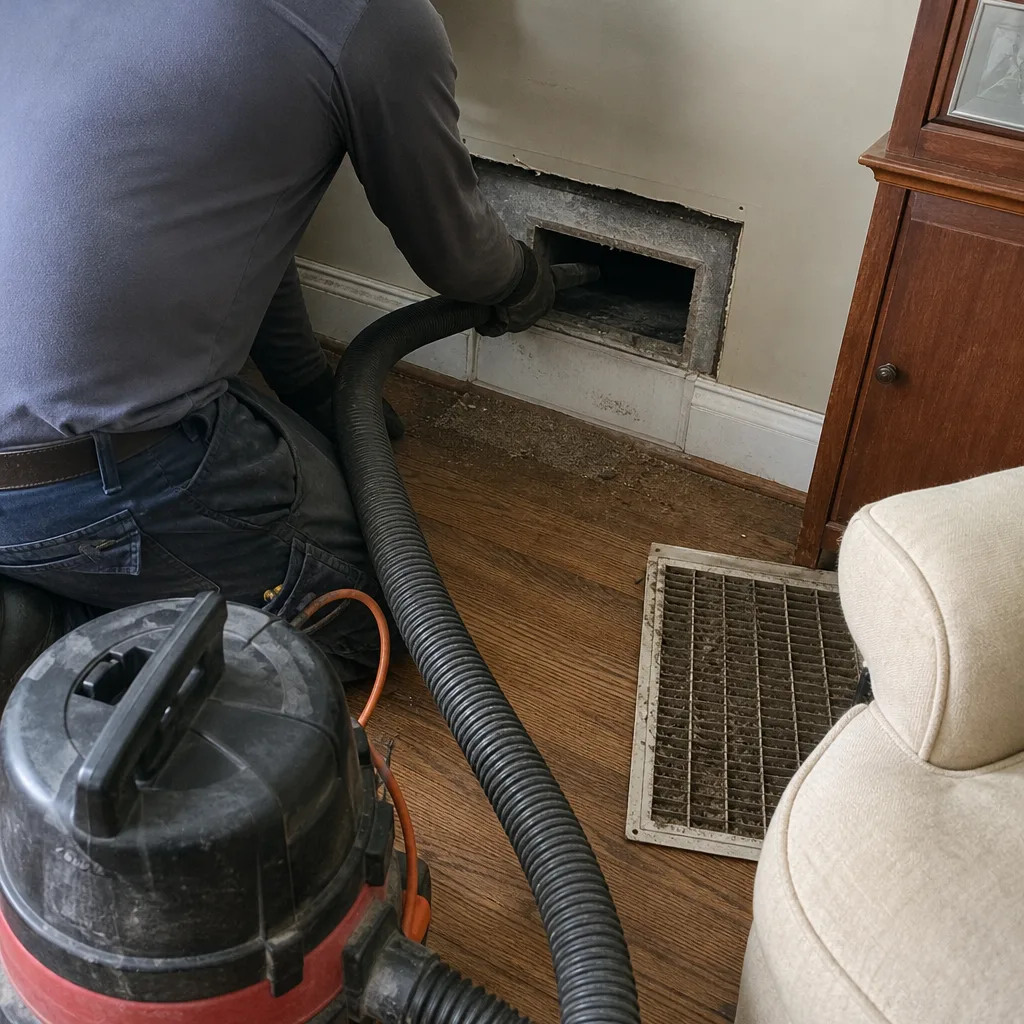 Before
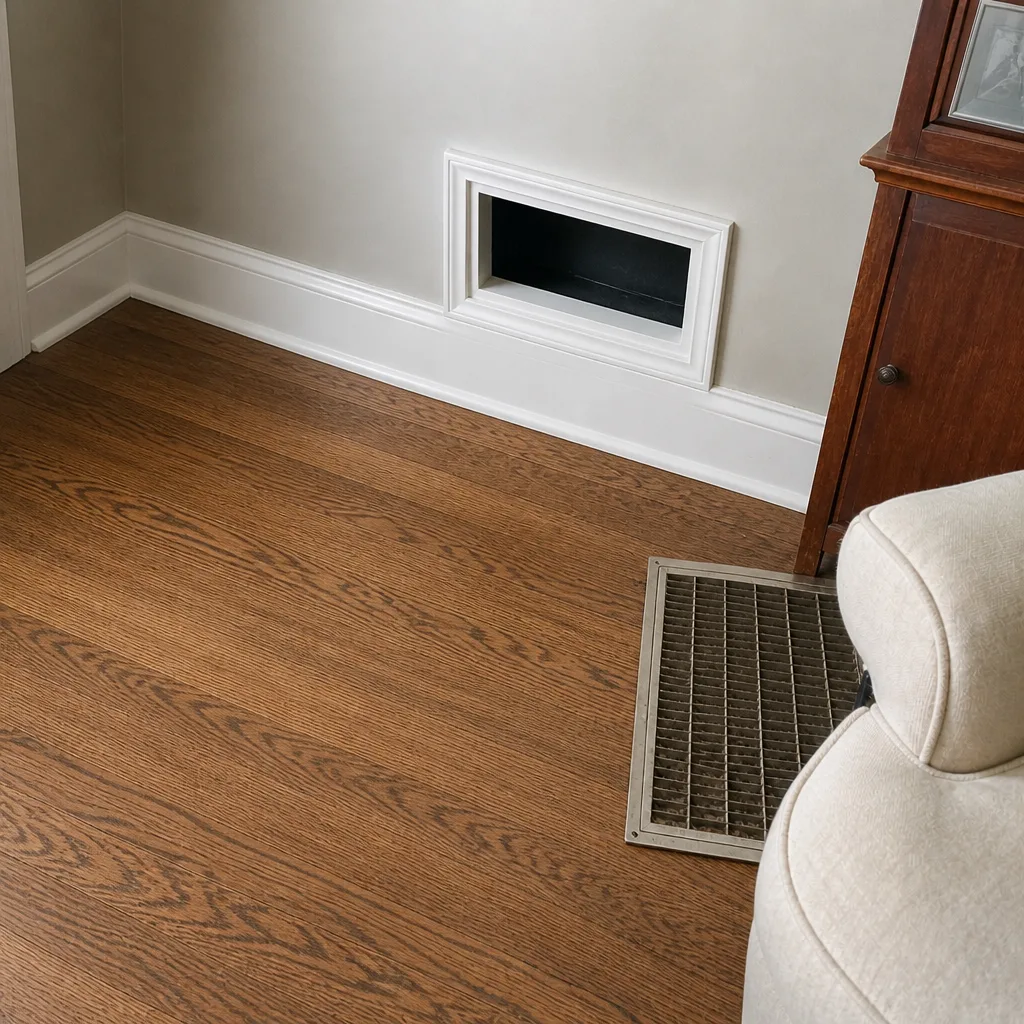 After
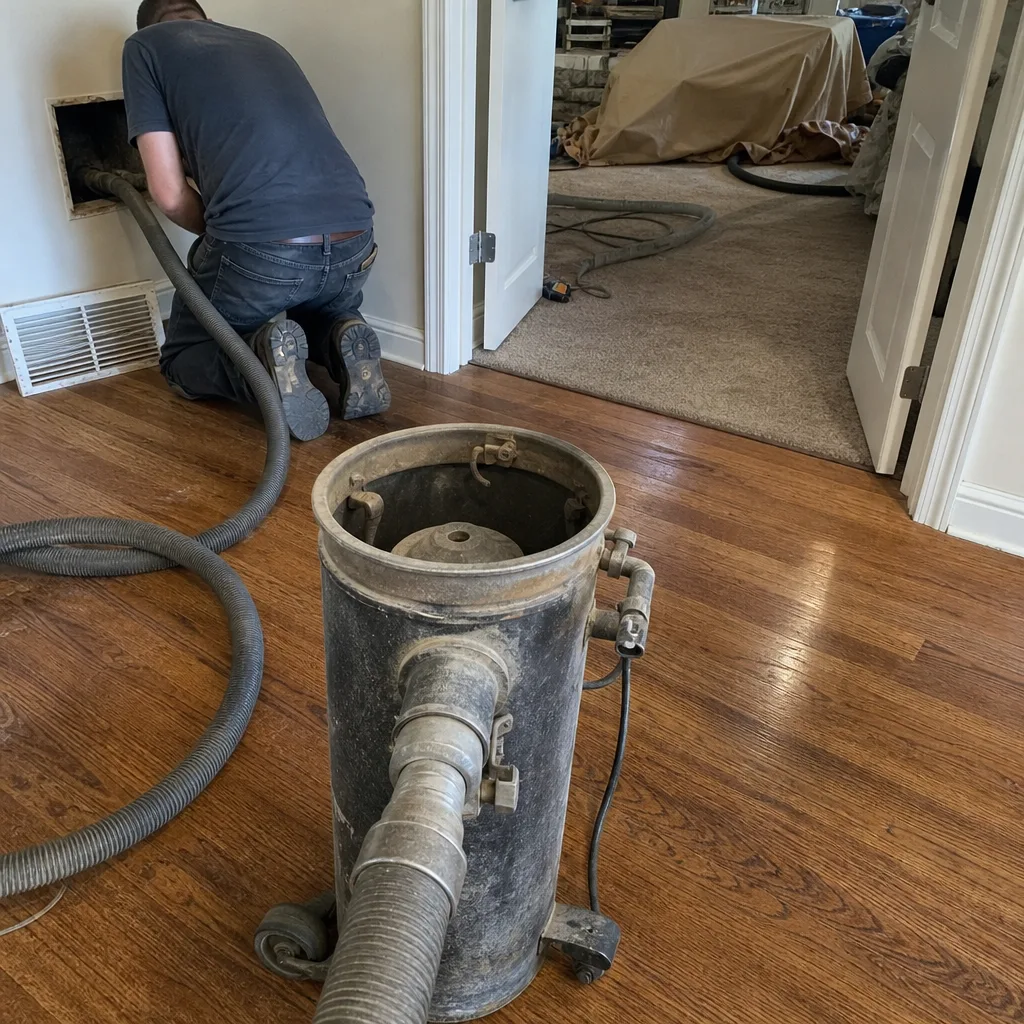 Before
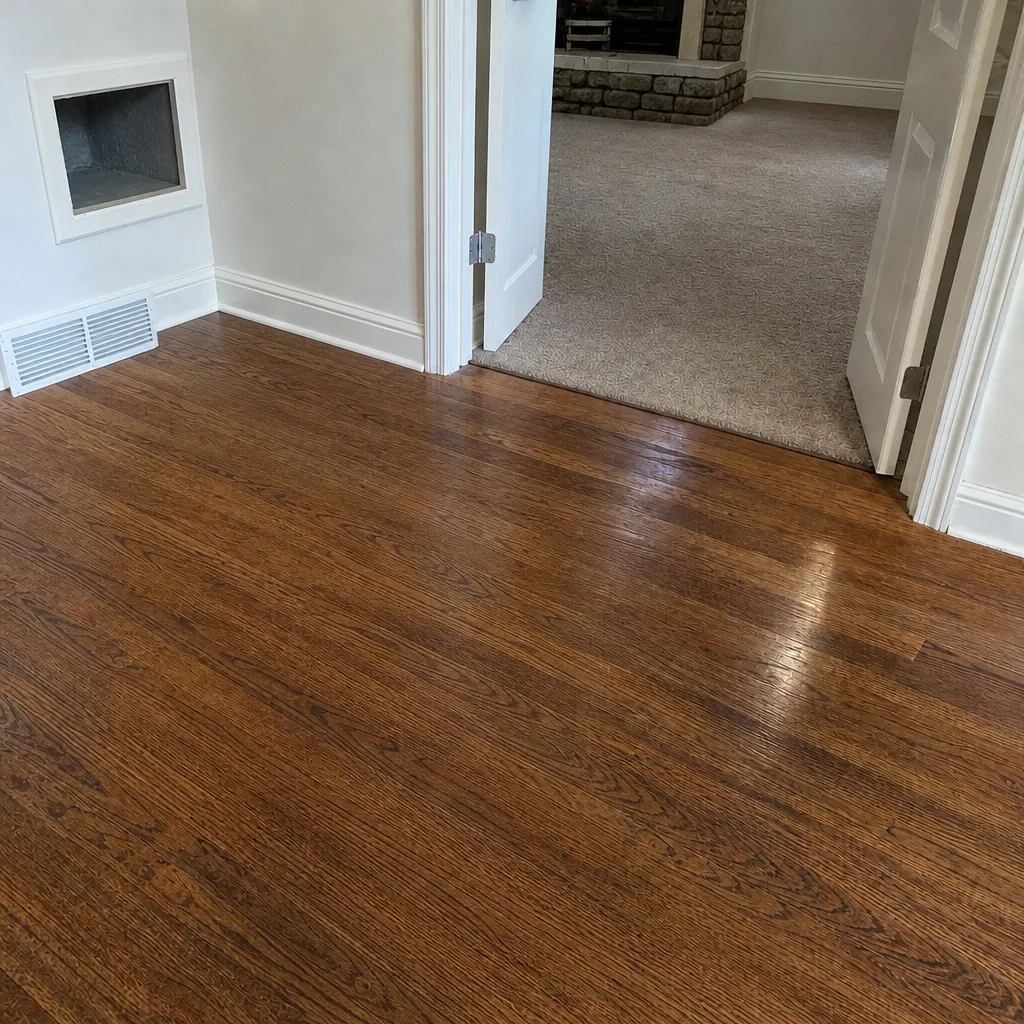 After
When to Call a Professional
Call a professional when the checklist turns up anything on the “red flag” list: visible debris at more than one register, musty odor that won’t clear, moisture streaks or condensation inside flex duct, a clogged dryer vent, a partially collapsed run, or unexplained uneven airflow. Also call after a major renovation in the past 12 months, after buying a resale home without prior duct records, or if you can’t remember the last time the system was professionally cleaned. Delmar Air Duct Cleaning offers free estimates in Winston-Salem – call (844) 834-1338. The price is set per job by a written estimate before any work begins. Our technicians have up to 13 years of experience, and we carry both cleaning and repair capability on every visit. Note that if any portion of the work touches HVAC electrical or gas components, we’ll hand that part to a licensed HVAC tech; safety comes first.
Frequently Asked Questions
Most Winston-Salem homes benefit from professional duct cleaning every three to five years, or more often after major renovations, after a move into a resale home, or whenever visible debris or musty odors show up. Homes with allergy sufferers or pets often benefit from a tighter schedule.
Yes. A filter reduces the dust that reaches the blower and coil, but it doesn’t stop long-term accumulation inside the duct walls, especially at the far end of runs and on horizontal stretches. Duct cleaning addresses what the filter can’t reach. Call (844) 834-1338 for a free estimate before you decide.
Cleaning addresses dust, debris, and light contamination in a functional duct system. Repair enters the picture when a run is disconnected, crushed, poorly sealed, or showing moisture damage. A walk-through usually makes the difference obvious. Call (844) 834-1338 to schedule an assessment – estimates are free.
High humidity combined with cold conditioned air inside flex duct in an unconditioned attic or crawl space creates a condensation risk if the duct’s vapor barrier is compromised. That moisture can lead to mold growth inside the insulation long before you notice anything at the register. Any sign of condensation inside or outside a run is a call-today signal.
Yes, in most cases. Drywall dust and construction debris travel through the return system and settle inside the ducts and on the blower. Cleaning after renovation resets the system and prevents that dust from recirculating through the home. Call (844) 834-1338 for a free estimate.
The dryer vent is on a separate maintenance cycle, but it belongs in the same annual plan. A clogged dryer vent is a fire risk that builds quietly, and most general duct cleaners treat it as an afterthought. We offer it as a dedicated service. Call (844) 834-1338 to schedule it alongside any duct work.
The Bottom Line
A duct maintenance checklist for a Winston-Salem home works best when you treat it as a tiered system, not a single to-do. Monthly, look at the filter, the registers, and the return. Every six months, walk the supply, return, and air handler cabinet with a flashlight and camera, and check flex runs for summer condensation. Every three to five years, schedule a professional mechanical cleaning that resets the system and reveals what the inspections can’t. Document what you see, so the technician who visits has real context to work from. If you’re in Winston-Salem, our technicians have up to 13 years of experience, we work with Winston-Salem homeowners on cleaning, repair, and dryer vent service, and the price is set per job by a written estimate before any work starts. Call (844) 834-1338. We answer 24/7. Fast dispatch from 7am to 7pm, Sunday through Friday.
Written by the team at Delmar Air Duct Cleaning.