
Last updated November 14, 2026
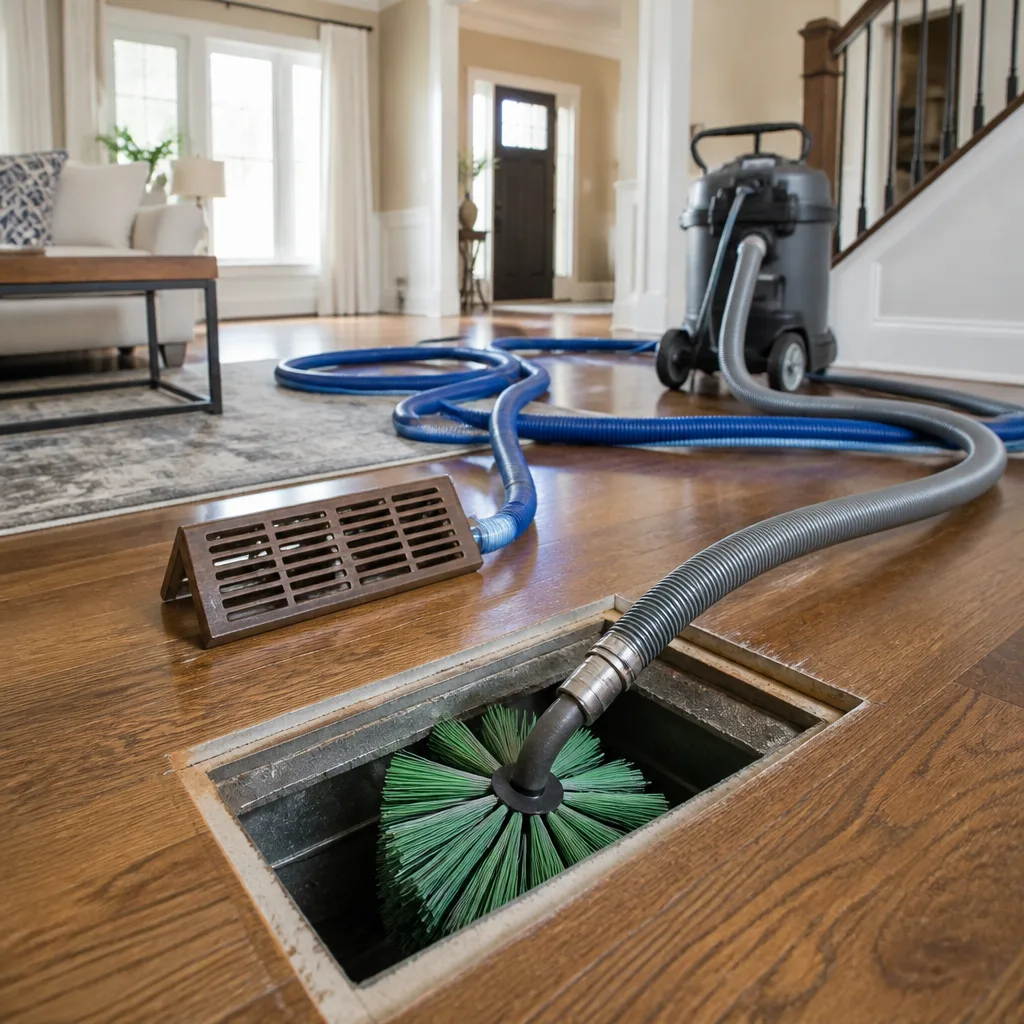 Whole-home duct cleaning
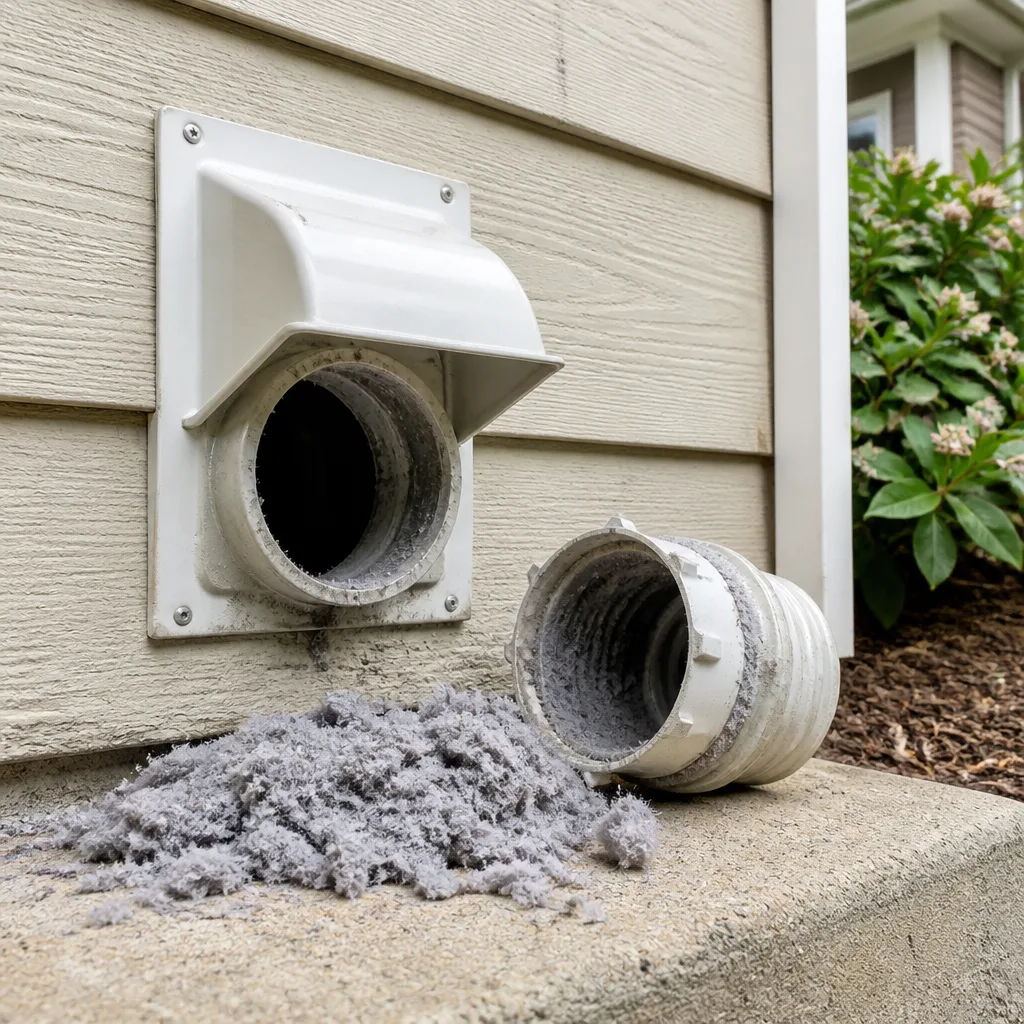 Dryer vent cleaning
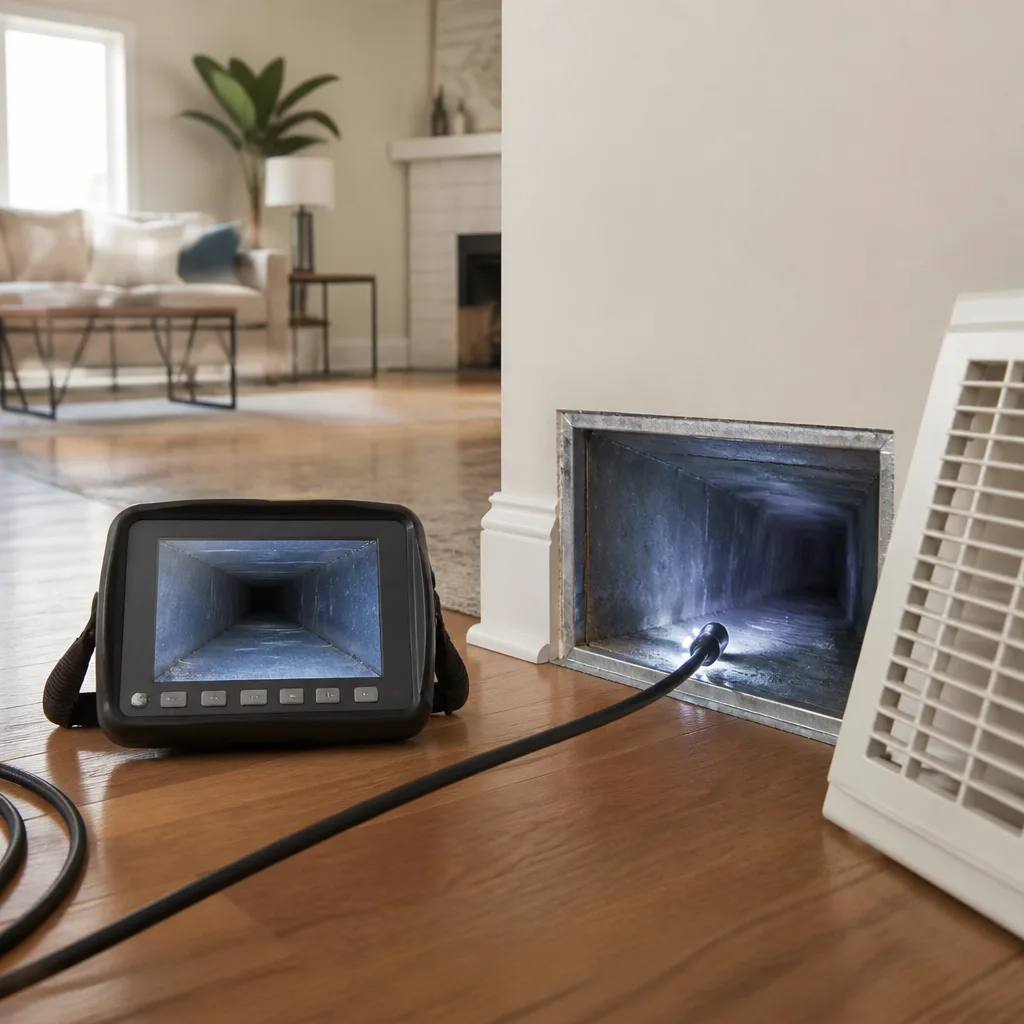 Camera inspection
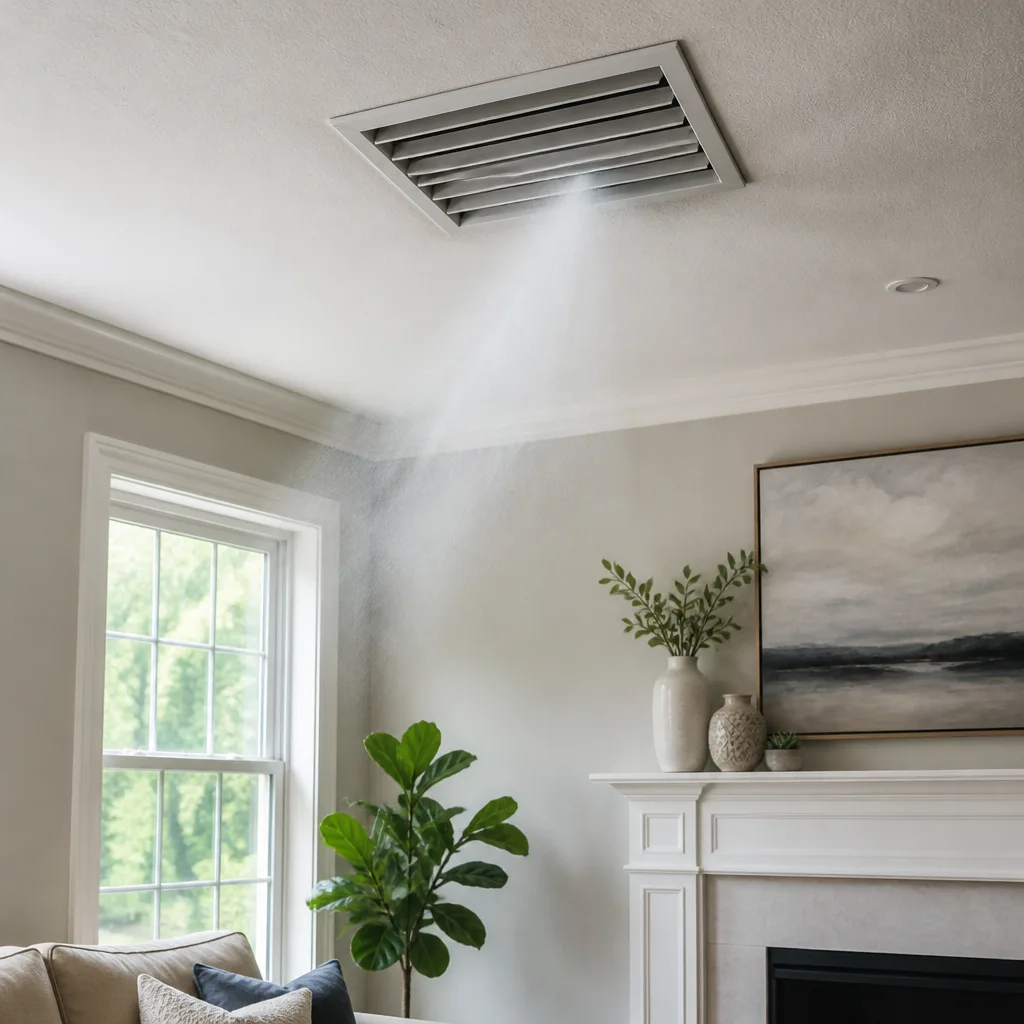 Sanitizing & deodorizing
Whole-system duct and dryer vent check with before-and-after photos - you see exactly what came out of your vents
That "$99 whole-house special" is a bait ad - the real number appears once they are in your hallway, or the "clean" is a shop-vac at the register. We photograph the inside of your ducts before and after instead.
Air Duct Cleaning Permits, Codes & Inspections in Winston-Salem, NC: What You Need to Know
A contractor who patches a collapsed flex duct section without pulling a mechanical permit in Winston-Salem isn’t saving you hassle. They’re leaving you with unpermitted work that can complicate a home sale or an insurance claim years later. Most homeowners assume any duct work falls under the same rules, and that assumption is where trouble starts. Cleaning is maintenance. Sealing is maintenance. Cutting in a new branch run or swapping out a trunk line is construction, and construction in North Carolina runs through a permit process. This guide walks through where that line sits, who’s allowed to cross it, how the city reviews the work, and what happens when a buyer’s inspector finds duct modifications that were never permitted in Winston-Salem.
Quick Answer
Routine air duct cleaning in Winston-Salem does not require a permit, and neither does sealing existing joints with mastic. A permit from the City of Winston-Salem Development Services office is required once duct work becomes a modification: replacing a trunk or main run, adding a new branch duct, or altering the system’s layout or capacity. Those permitted jobs must be pulled and performed by a licensed North Carolina mechanical contractor.
Styles & brands we work with
- Whole-home duct cleaning
- Dryer vent cleaning
- Camera inspection
- Sanitizing & deodorizing
Table of Contents
- Where does duct cleaning end and permit-required duct work begin?
- What does the North Carolina Mechanical Code actually say about ducts?
- How does the City of Winston-Salem permit process work for mechanical work?
- Which duct jobs require a licensed mechanical contractor?
- How do unpermitted duct modifications surface during a home sale?
- Cleaning, sealing, replacing, adding: a practical breakdown
- What does a mechanical inspection of duct work actually check?
- What changes in older Winston-Salem housing stock?
Where does duct cleaning end and permit-required duct work begin?
The dividing line is whether the work changes the system or restores it. Cleaning restores. Any change to the duct layout, the number of supply or return runs, or the size of a trunk line alters the system’s design, and design changes are what the code review process exists to catch.
Think about what a permit protects. A duct system is sized against a load calculation done when the house was built or when the HVAC equipment was last replaced. A trunk line that’s too small for the air the system moves will whistle, lose pressure, and leave back rooms hot. A branch added in the wrong place can starve every other run on the same trunk. The permit and inspection process is the city’s way of confirming somebody qualified looked at those numbers before the drywall went back up.
Cleaning, by contrast, doesn’t touch the geometry. Our technicians mechanically agitate the duct interior with a rotary brush system, extract the loosened debris with negative pressure, and inspect the result. Nothing is resized. Nothing is rerouted. That’s why it falls under maintenance and sits outside the permit requirement in Winston-Salem.
Here’s the distinction in plain terms:
- Restoring the system: cleaning, sanitizing, sealing gaps between existing sections, reconnecting a duct that has come loose at a joint. No permit.
- Changing the system: new branch runs, trunk replacement, rerouting a duct through a different wall cavity, upsizing or downsizing a run. Permit required.
- Repairing damage: depends. A collapsed flex section replaced in kind at the same location is usually a repair. Cutting into a rigid trunk and rebuilding a section is a modification, and the city treats it as such.
If you’re unsure which side of the line your job falls on, ask before the work begins. Our team handles air duct cleaning and duct repair, and we’ll tell you straight when a job needs a permit and a licensed contractor rather than quietly doing it ourselves. That call is worth making early.
What does the North Carolina Mechanical Code actually say about ducts?
The North Carolina Mechanical Code is the state’s adopted version of the International Mechanical Code, and it governs duct construction, materials, sizing, sealing, and support. Local jurisdictions like Winston-Salem enforce it through their inspections departments. The code’s core principle for ducts is simple: air distribution systems must be designed, installed, and sealed so they deliver the required airflow without excessive leakage, and the materials used must be rated for the application.
What that means in practice for homeowners:
- Duct sealing is addressed by the code as a construction standard, not as a permit item. Joints in accessible locations are expected to be sealed. When a cleaning contractor seals visible gaps with mastic, they’re bringing the system up to the standard, not modifying its design.
- Duct material matters. Flex duct has a maximum length limit and must be supported and routed without sharp bends that crush the inner liner. Rigid sheet metal and duct board each carry their own rules. When a replacement run doesn’t follow those rules, that’s a code violation whether or not anyone pulls a permit.
- Connections to the air handler and to boots at registers are part of the system. A duct that’s pulled loose at the plenum and never re-sealed properly is a failure point the code cares about, and so should you.
- Alterations require a permit. The code gives the local authority the right to require a permit for any work that changes a system’s configuration, and Winston-Salem exercises that right for duct modifications.
We see a lot of Winston-Salem homes where the ducts were worked on over the years by whoever was already there for another job. Disconnected runs, unsealed joints, flex tucked into a corner so tight the liner pinches shut. None of that is a permit issue in itself, but it’s exactly the kind of work the code exists to prevent. A cleaning visit often turns up these findings, and it’s better to know than not.
How does the City of Winston-Salem permit process work for mechanical work?
Mechanical permits in Winston-Salem are issued through the City of Winston-Salem Development Services department, which handles plan review and inspections for construction work inside the city limits. The process is straightforward if you know the order of operations. What it is not is optional.
- Determine what’s permitted. A licensed mechanical contractor confirms whether the scope is a repair, an alteration, or new installation. Cleaning and sealing don’t go through this step. Trunk replacement and new branch runs do.
- Submit the permit application. The contractor applies, listing the scope, the property address, and the contractor’s license information. In most cases a mechanical permit for residential duct work doesn’t require full drawn plans unless the scope is unusual.
- Pay the permit fee. Fees scale with the value and type of work. A single branch run costs less than a full trunk replacement. We won’t quote a number here because fees change and the fee belongs to the city, not to us; your contractor can tell you the current figure before applying.
- Schedule the rough-in inspection. For duct work, the inspection typically happens after the duct is installed and accessible but before it’s closed in. If it’s a replacement in an open basement or attic, the duct is visible either way.
- Complete the final inspection. The inspector confirms the installation matches the permitted scope and meets the code standards for support, sealing, and materials. Once it passes, the permit is closed.
- Keep the record. The closed permit is part of the property’s history. It shows up in a title search or a buyer’s due diligence, and it’s your evidence that the work was done right.
The time it takes varies with the city’s inspection queue and the contractor’s schedule. Allow a few days for the permit to be issued and plan the inspection after the duct is in. None of this is a reason to skip the process; a home sale six years from now is far more disruptive than a few days of waiting.
Which duct jobs require a licensed mechanical contractor?
North Carolina licenses mechanical contractors at the state level, and the license class determines the size of the work a contractor may take on. Duct modifications fall under that licensing system, which means the person cutting into your trunk line needs to hold a current mechanical license. Cleaning technicians aren’t required to hold one because cleaning isn’t mechanical construction.
The practical split looks like this:
- Cleaning and sanitizing: no license required. Anyone with the equipment can perform it. That’s also why the quality of the work ranges so widely, and why you should ask what equipment a company brings.
- Sealing existing joints and accessible leaks: no license required as a maintenance activity.
- Replacing a section of flex duct in kind: a gray area in many homes. A like-for-like repair at the same location is generally treated as repair, but if it’s more than a short patch, ask the question.
- New branch runs, trunk replacement, rerouting, resizing: licensed mechanical contractor and a permit. No exceptions.
When you hire a cleaning company, ask whether they perform duct repair in-house and whether their repair work is done by a licensed mechanical contractor. Some companies clean and hand you a list of repairs to farm out. We offer both cleaning and repair as a single call, with repair work scoped and, when required, permitted correctly. Our technicians have up to 13 years of experience, and the equipment we run matters too: Rotobrush rotary brush systems, Nikro cleaning tools, and Abatement Technologies equipment for jobs that need containment and controlled air pressure.
How do unpermitted duct modifications surface during a home sale?
They surface in three places, and each one costs the seller time. The first is the buyer’s home inspection, where a careful inspector will note new duct runs, recent trunk work, or fresh mastic in areas that suggest a modification. The second is the disclosure form, where the seller has to answer whether they know of unpermitted work. The third is the title search and permit history, which shows what was pulled and what wasn’t.
Once a buyer’s agent flags unpermitted duct work, the typical sequence looks like this:
- The buyer asks for documentation. A closed permit is the clean answer. Without one, the question becomes whether the work meets code at all.
- An inspection of the duct system follows. A licensed mechanical contractor or the city’s inspector reviews the installation for materials, support, sizing, and sealing. Any defect gets quoted for correction.
- The seller either retrofits or credits. Retrofitting means pulling a permit now, correcting anything the inspection flags, and closing it out. The credit route means the buyer takes a price reduction to handle it themselves. Either way, the seller pays.
- The sale closes later, or at a lower number. Unpermitted work doesn’t kill every deal, but it always shows up at the negotiating table.
For buyers, this cuts the other way. If you’re purchasing an older Winston-Salem home and the duct system has an unknown history, a pre-sale duct inspection is cheap insurance. Our team can clean the system, document what we find, and tell you whether anything looks like a modification that should have been permitted. Living with a quiet problem is easy until it’s the reason a deal stalls.
Cleaning, sealing, replacing, adding: a practical breakdown
Here’s the part people search for, laid out clearly. Most duct work homeowners ask about falls into four buckets, and only two of them involve the city.
- Air duct cleaning – no permit. Mechanical agitation, extraction, and inspection. Nothing changes about the system’s design. This is the bulk of what we do in Winston-Salem, and it’s the same in every neighborhood we serve.
- Duct sealing with mastic – no permit. Sealing accessible joints, gaps at the plenum, and connections at register boots. This improves performance and reduces leakage, and it’s maintenance under the code.
- Replacing a trunk line – permit required. A trunk is the main artery of the system. Replacing it changes the system’s capacity and requires a licensed mechanical contractor and a permit. Expect rough-in and final inspections.
- Adding a branch run – permit required. A new supply or return branch changes the system’s design. Sizing has to be right, or the whole system loses balance. Licensed contractor, permit, inspection.
Where it gets murky is repair. A duct that’s come loose at a joint and gets reconnected and re-sealed isn’t a modification. A collapsed flex section in an attic that’s replaced with the same size flex, same route, same connections usually counts as a repair too. But a “repair” that cuts out two feet of rigid trunk and rebuilds it is closer to an alteration, and we treat it as one until proven otherwise. That conservative read protects you.
If you’re dealing with a system that’s failing and you can’t tell whether the fix is repair or replacement, our Winston-Salem team can look at it and tell you plainly. We’d rather point you to a licensed mechanical contractor for a permitted job than do unpermitted work and hand you a problem later. That’s how a full-system specialist should operate.
What does a mechanical inspection of duct work actually check?
The inspector isn’t checking whether the ducts are clean. That’s not what the permit covers. They’re checking that the installation matches the permitted scope and follows the code standards for the system. What they look at depends on the job, but the usual list includes:
- Materials. Flex duct rated for the application, rigid metal and duct board of the right gauge and thickness, and connections sealed with an approved method.
- Support and routing. Ducts supported at proper intervals, flex not compressed below the minimum bend radius, no crushing against joists or trusses.
- Sizing and layout. The installation matches the permitted scope and the design airflows. This is where the load calculation behind the original system matters.
- Sealing. Joints in accessible locations sealed to the code standard. That includes the connection at the air handler.
- Clearances and penetrations. Duct work doesn’t obstruct required clearances around equipment, and penetrations through rated assemblies are handled correctly.
When a clearing contractor does permitted work, the inspector signs off, and the permit closes. When a homeowner does an unpermitted change, there’s no inspection, and code defects go into the system quietly. That’s the real cost of skipping the permit: not the fee, but the missing review.
What changes in older Winston-Salem housing stock?
Winston-Salem’s neighborhoods span a wide range of construction eras, and duct systems age differently across them. Homes in the older parts of town often have original or reworked duct systems that have been touched by several contractors over several decades. When a system like that gets a cleaning, we find the history: disconnected runs in unconditioned attics, unsealed joints at the plenum, flex runs pinched at corners where they were originally installed.
That history matters for the permit question. A duct installation from decades ago wasn’t necessarily permitted under today’s rules, and that’s not a problem for a current owner. The rule of thumb is that the permit applies to the work being done now, not to work done before the current system. But if you’re changing the system, the permit and licensed contractor requirement applies to your job, regardless of what the previous owners did or didn’t do.
Winston-Salem’s humid summers and cold winters put real pressure on duct sealing. Every unsealed joint in an unconditioned attic is a place where cooled air escapes in July and heated air escapes in January. That’s why sealing matters more here than in milder climates. And the summer humidity is also why a musty smell at the registers often traces back to moisture sitting in dust that’s trapped inside the ductwork. Cleaning solves the dust; sealing solves the leakage; the two together are how a system performs the way it should.
If your house is older and you’ve never had the duct system documented, cleaning is a sensible first step. We photograph the system before and after, so you have a record of what the ducts looked like and what we found. That record becomes useful when you sell, when you change insurance, or when a repair question comes up.
Common Mistakes to Avoid
- Assuming duct replacement doesn’t need a permit. It does. A trunk line replacement or a new branch run is a system alteration, and skipping the permit leaves you with unpermitted work that a buyer will find. Ask your contractor for the permit number before the work starts.
- Asking a cleaning company to “just patch it” without knowing the scope. A short repair at a joint is one thing; cutting into a rigid trunk is another. Be clear about what the repair involves before anyone picks up a tool.
- Hiring a handyman for duct modifications. North Carolina requires a licensed mechanical contractor for permitted duct work. A handyman with a truck can clean a duct and seal a joint, but a new branch run isn’t in their scope.
- Accepting a cleaning quote that includes a bundled repair with no paperwork. If a company offers to clean and modify in the same visit at a single price, ask which piece requires a permit. The honest answer separates the cleaning from the construction.
- Skipping the documentation. Keep the permit, the inspection record, and before-and-after photos of your duct system. When you sell, these are the documents that answer the buyer’s questions in one email instead of a week of back-and-forth.
- Treating the city’s fee as the reason to skip the permit. The fee is small compared to what a buyer’s inspection and retroactive correction cost at closing. The permit is the cheaper path by a wide margin.
- Assuming a closed permit is the same as a good job. A permit means the work was inspected against the code. It doesn’t mean the duct is clean. Have the system cleaned and inspected on its own schedule.
See the difference
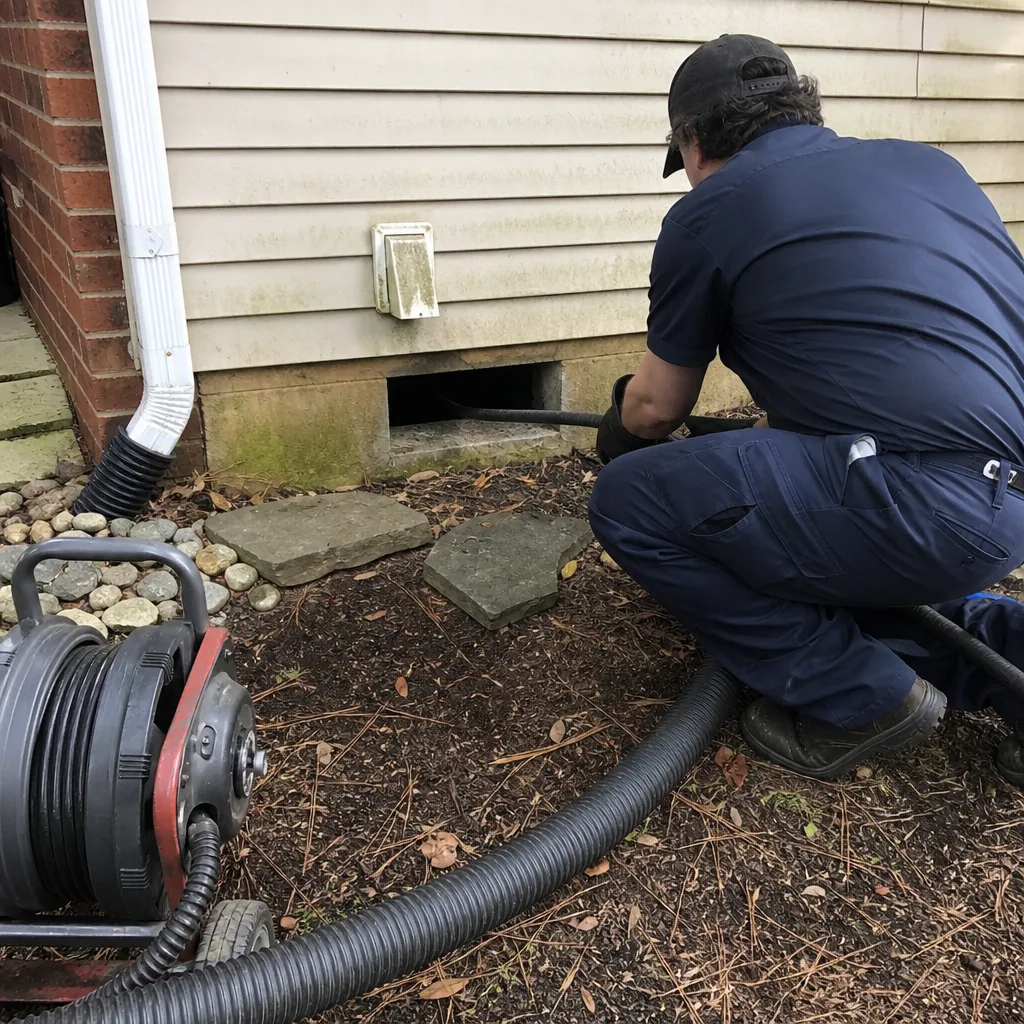 Before
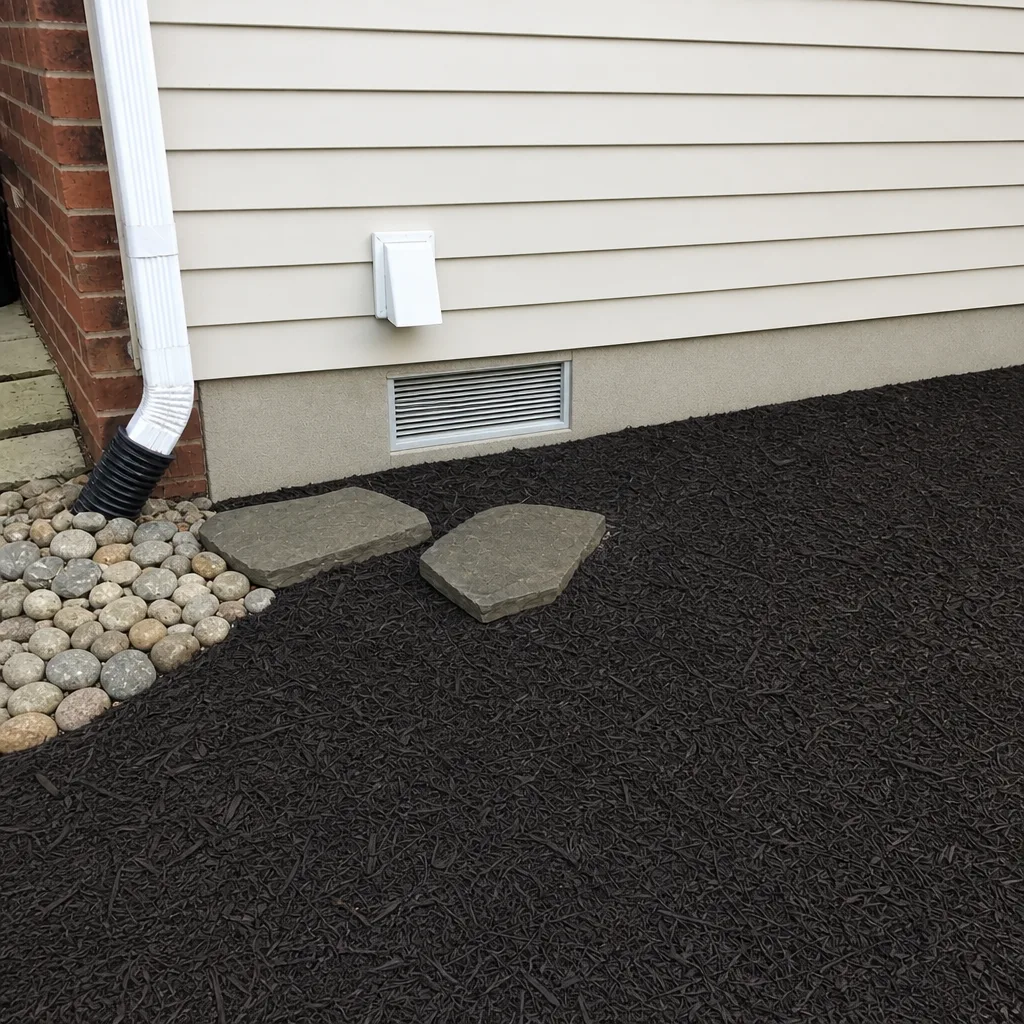 After
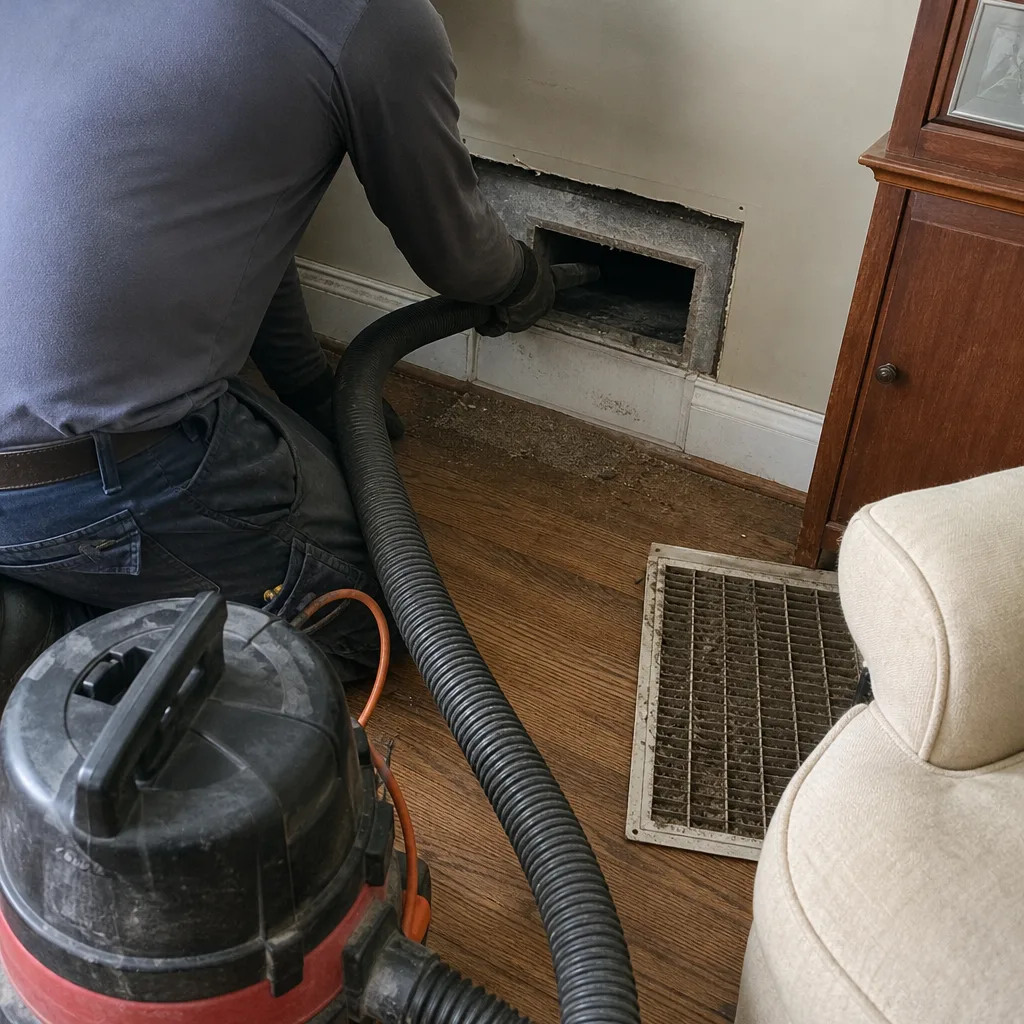 Before
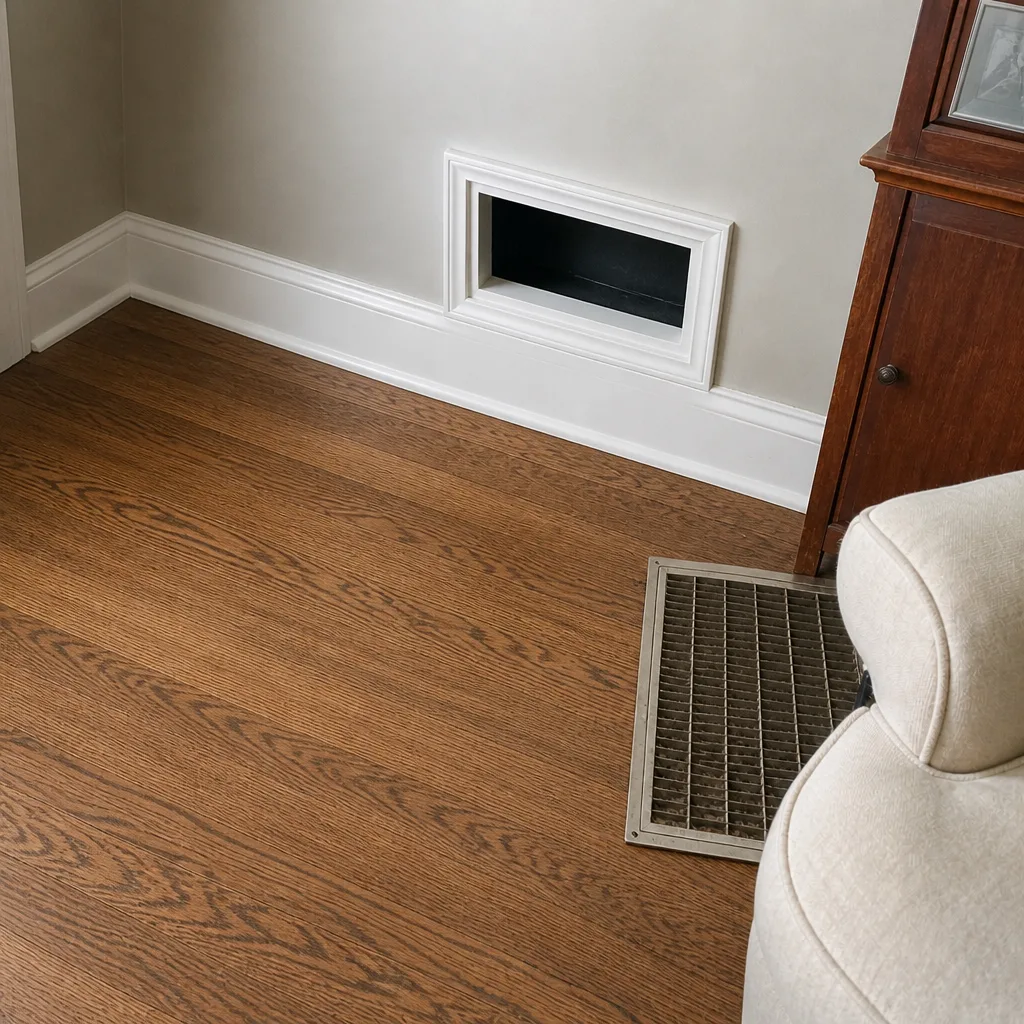 After
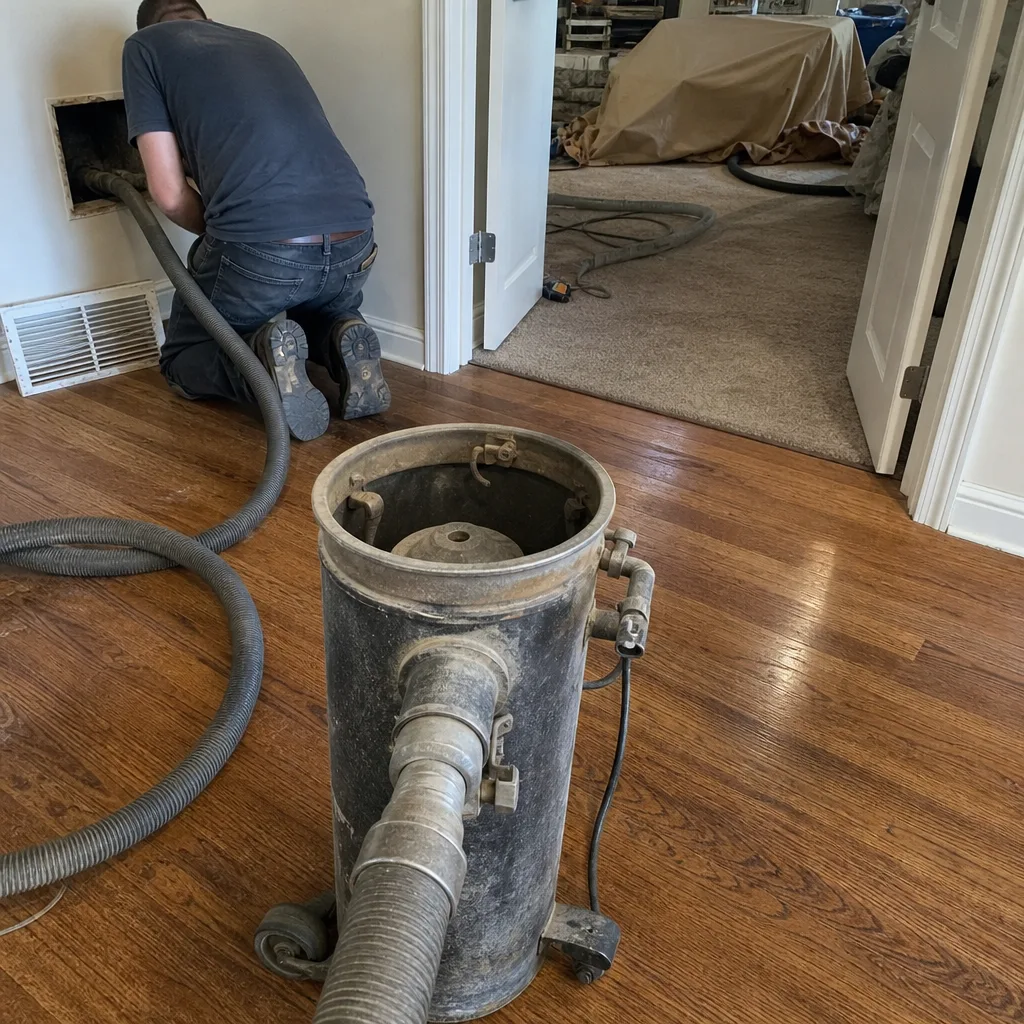 Before
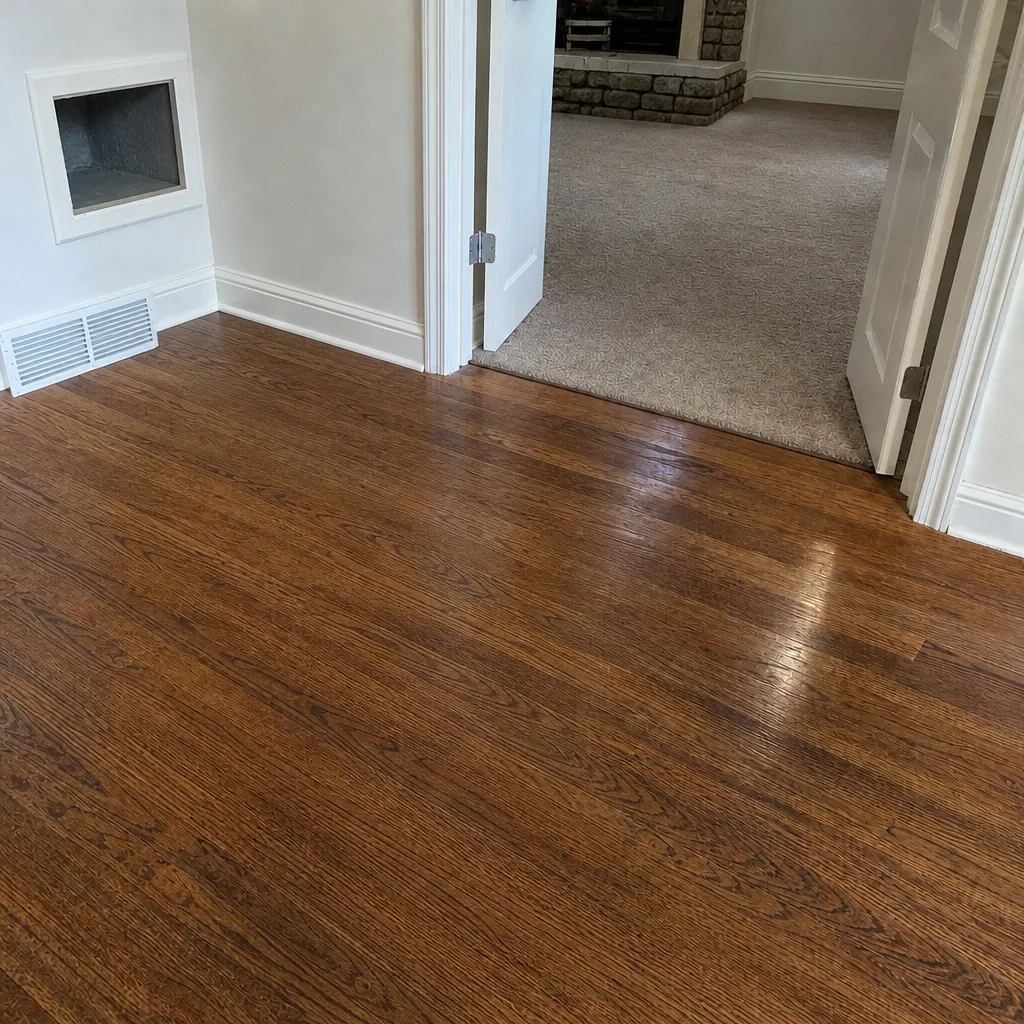 After
When to Call a Professional
Call a professional when the duct problem is beyond what cleaning can fix. If a duct is loose, disconnected, crushed, or visibly torn, cleaning won’t help until the duct is repaired. If the system is loud, delivers weak airflow to some rooms, or you’re seeing condensation on duct surfaces, those are symptoms that need a diagnostic look. If you’re planning a renovation that adds or moves a register, that’s a permitted job and needs a licensed mechanical contractor. And if a contractor has offered to modify your duct system without mentioning a permit, get a second opinion before work starts. Delmar Air Duct Cleaning offers free estimates in Winston-Salem: call (844) 834-1338. We answer 24/7, with fast dispatch from 7am to 7pm, Sunday through Friday. Estimates are free, and the price is set per job by the written estimate. We’ll tell you when a job needs a permit and a licensed contractor, and we’ll handle the cleaning and repair work that doesn’t.
Frequently Asked Questions
No. Air duct cleaning is maintenance, not construction, and it doesn’t change your system’s design, so the City of Winston-Salem doesn’t require a permit for it. Cleaning involves mechanical agitation, extraction, and inspection of the existing ducts. If the same visit turns up a duct that needs to be replaced or rerouted, that’s a separate scope and the permit question applies to that piece. Call (844) 834-1338 for an exact quote; estimates are free.
No. Sealing existing joints, gaps, and connections with mastic is treated as maintenance under the North Carolina Mechanical Code. The code sets a sealing standard, and bringing an existing system up to it doesn’t require a permit. The line moves when the work changes the system’s layout or capacity rather than sealing what’s already there. If you’re not sure which side of that line your job falls on, ask before the work starts.
Only a licensed North Carolina mechanical contractor, with a permit pulled from City of Winston-Salem Development Services, unless you’re doing the work on your own home yourself. Duct replacement is a system alteration, and the city inspects the work. A cleaning contractor can clean, seal, and repair at joints without a license, but a full replacement or a new branch run isn’t in their scope. Ask for the license and the permit number before work begins.
Possibly, and it usually comes up during the buyer’s inspection or the permit history search. The buyer or their agent can see what permits were pulled, and a mismatch between recent duct work and your permit record invites a conversation about remediation. A closed permit is the cleanest answer; without one, the buyer may ask for a credit or for retroactive permitting before closing. Getting the permit at the time of the work is the simpler path.
Check the permit history with City of Winston-Salem Development Services, which tracks mechanical permits for work inside the city limits. A licensed contractor pulled a permit if the work was done correctly. If the history shows nothing for the date of the work, ask the contractor who did it for documentation. In our experience, a duct system with an unknown history benefits from a cleaning and inspection, which documents what’s actually there.
Yes. Adding a new supply or return run changes the system’s design, and that requires a licensed mechanical contractor and a permit from the city. The new run has to be sized correctly against the system’s airflow, or the rest of the ducts lose performance. This is one of the common mistakes homeowners make: hiring whoever is already on site to cut in a register. Call (844) 834-1338 if you want an honest read on whether your job falls into this category.
The Bottom Line
In Winston-Salem, cleaning your ducts doesn’t require a permit, and neither does sealing gaps with mastic. Replacing a trunk line or adding a branch run does, and that work has to be done by a licensed North Carolina mechanical contractor and inspected by the city. The distinction matters most at home sale time, when a buyer’s inspector finds recent duct work and the permit history shows nothing. The permit fee is small; the retrofit and the negotiation are not. If you’re staring at a duct problem and can’t tell whether it’s repair or modification, ask before the work begins. We’ll tell you where the line is, and we’ll handle the cleaning and repair work that doesn’t cross it. For the cleaning side, see our Delmar Air Duct Cleaning home page; for the fire-safety service that often rides along with a duct visit, our dryer vent cleaning page covers what’s involved. Call (844) 834-1338 for a free estimate. We answer 24/7, with fast dispatch from 7am to 7pm, Sunday through Friday.
Written by the team at Delmar Air Duct Cleaning.