
Last updated November 14, 2026
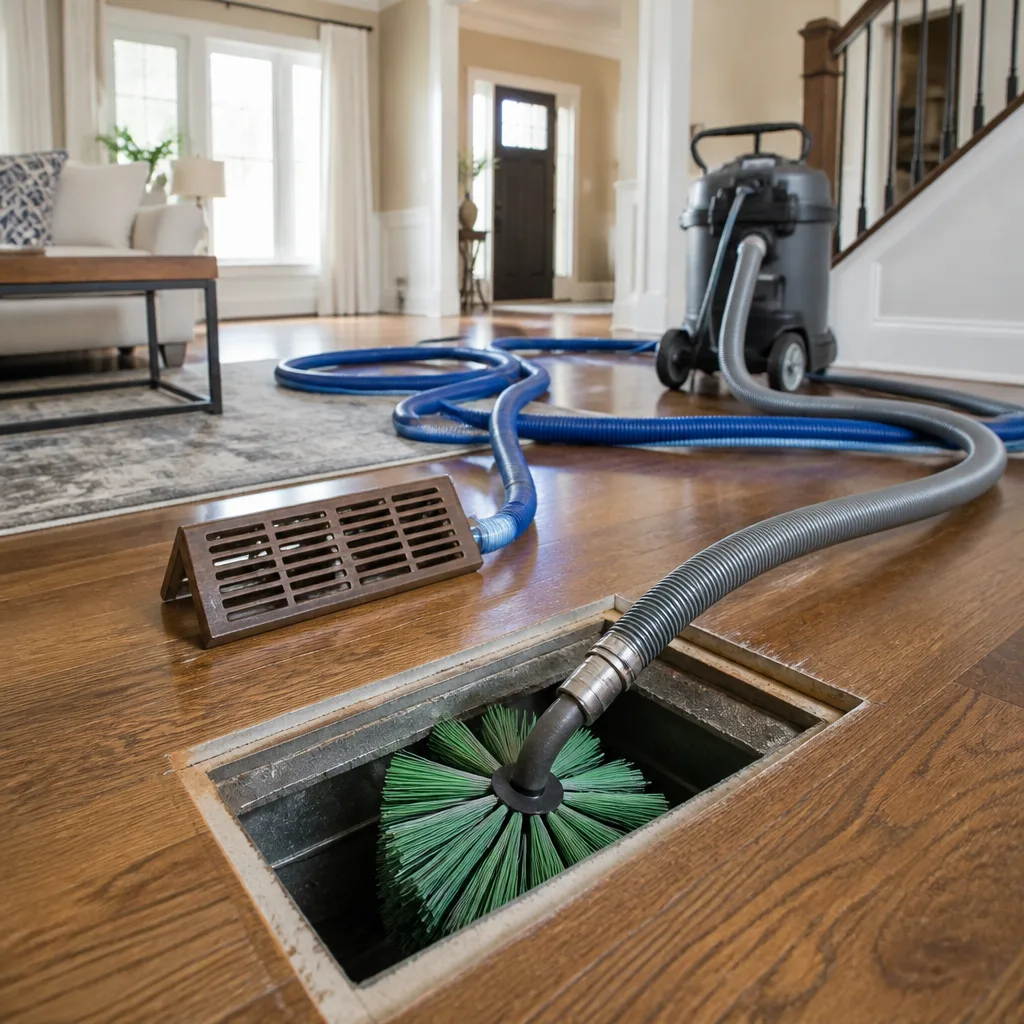 Whole-home duct cleaning
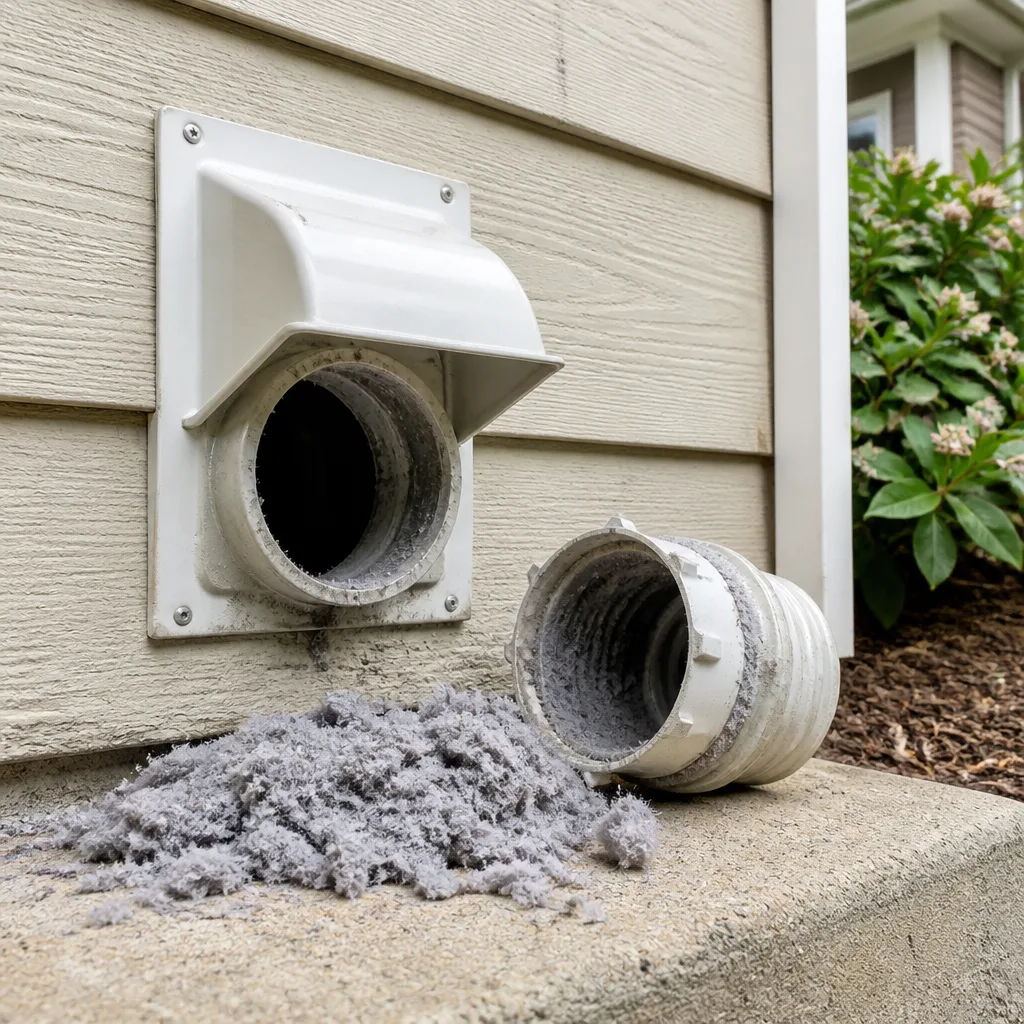 Dryer vent cleaning
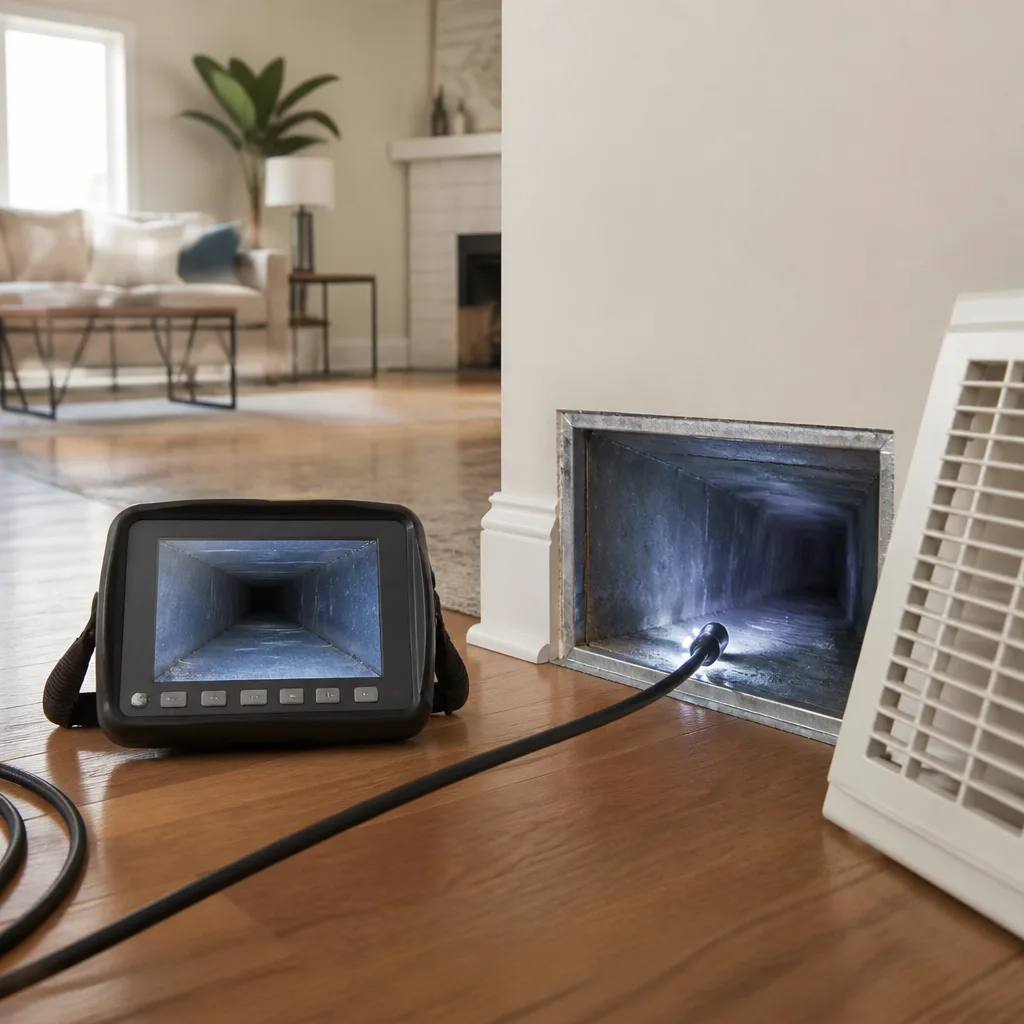 Camera inspection
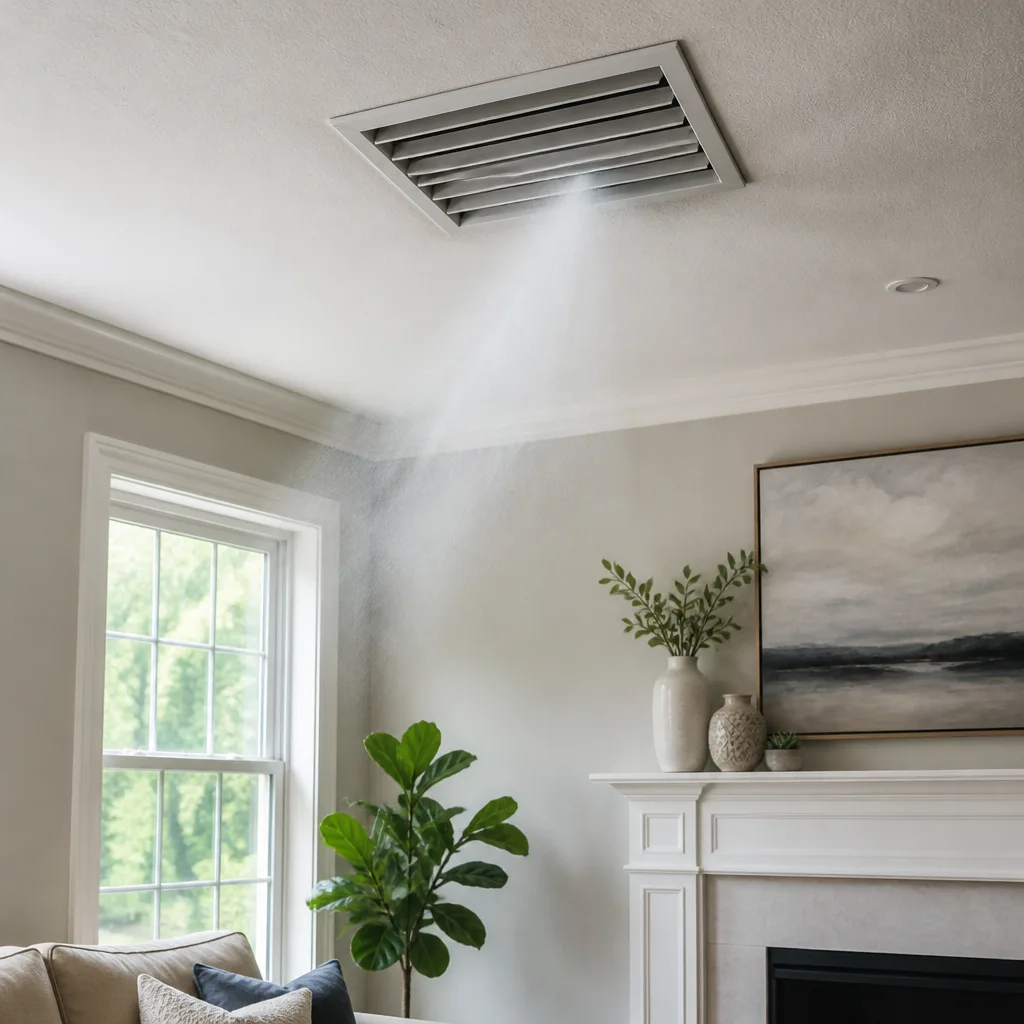 Sanitizing & deodorizing
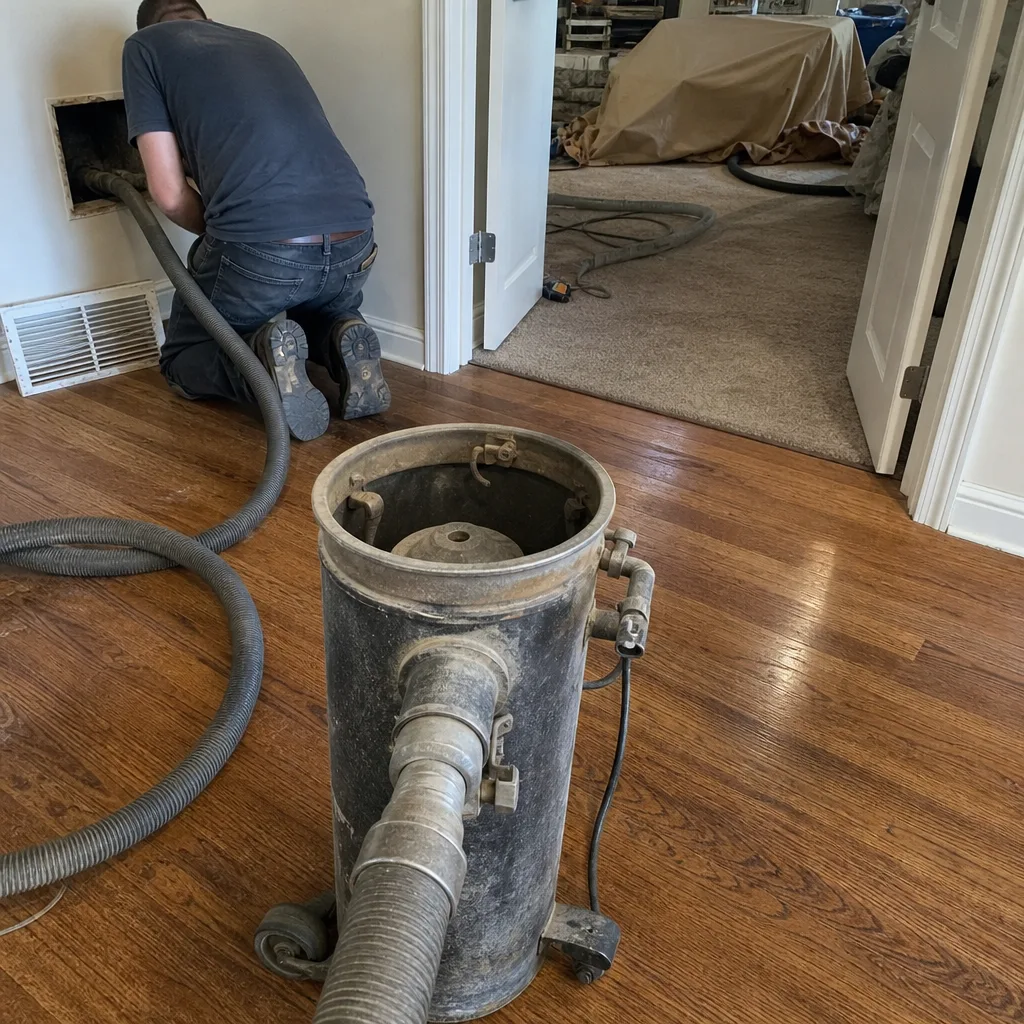
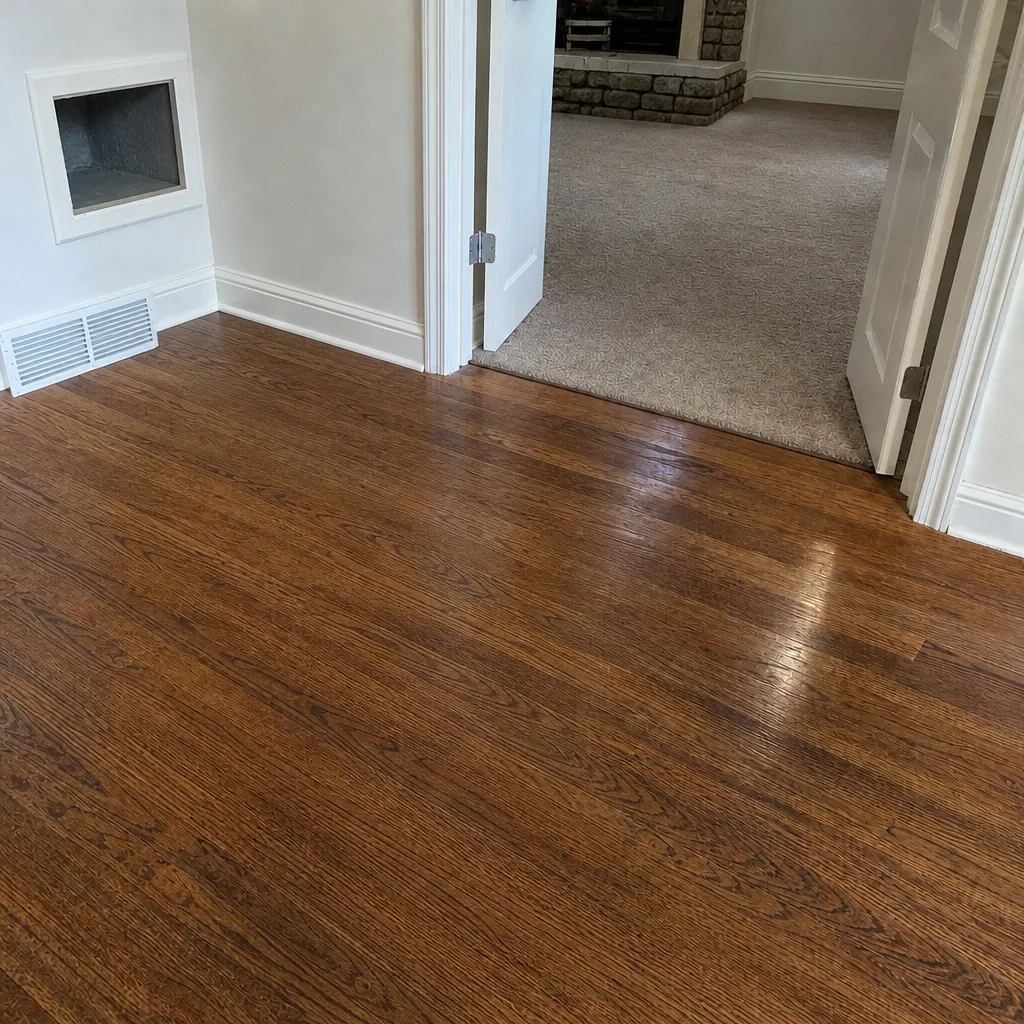
Whole-system duct and dryer vent check with before-and-after photos - you see exactly what came out of your vents
That "$99 whole-house special" is a bait ad - the real number appears once they are in your hallway, or the "clean" is a shop-vac at the register. We photograph the inside of your ducts before and after instead.
Air Duct Cleaning Warning Signs: A Winston-Salem Homeowner’s Reference Guide
Dust on your supply registers almost never means your filter is failing. It’s a pressure and velocity signal, and it tells a technician something specific about where buildup sits inside the duct system. That single reframing changes how you read every other sign in your home: the musty smell that shows up only in certain months, the bedroom that never quite warms up, the rattle behind the wall when the blower kicks on. This guide gives Winston-Salem homeowners the vocabulary to describe what they’re actually observing, so a technician arrives with a diagnosis in mind instead of a mystery to solve from scratch.
Quick Answer
The main warning signs of a duct system that needs attention are dust patterns on and around registers, musty or stale odors that change with the season, rooms that stay noticeably warmer or cooler than the rest of the house, new rattling or whistling sounds, and visible debris or pest activity at vents. In Winston-Salem’s older housing stock, a sixth sign matters just as much: flex duct installed over original metal ductwork that was left in place, which traps contamination between the two layers. Two or more of these together usually points to a system that needs cleaning or repair, not just a filter change.
Styles & brands we work with
- Whole-home duct cleaning
- Dryer vent cleaning
- Camera inspection
- Sanitizing & deodorizing
Table of Contents
- Sign 1: Dust on Registers vs. Dust Streaking Around Them
- Sign 2: Musty Odors and What the Season Tells You
- Sign 3: Uneven Room Temperatures and Duct Restriction
- Sign 4: Sounds From Your Ductwork, Mapped to Causes
- Sign 5: The Double-Wall Trap in Older Winston-Salem Homes
- Sign 6: Visible Debris, Pests, and What You Can Actually See
- How to Do an Airflow Comparison Across Your Registers
- Common Mistakes to Avoid
Sign 1: Dust on Registers vs. Dust Streaking Around Them
These two patterns look similar at a glance and have completely different causes. Dust settled on the face of a register is usually an airflow turbulence symptom: the air leaving the vent is fast and slightly unsettled, and it deposits particles on the grille before they disperse into the room. Streaking, by contrast, is dust that has been pulled through a gap and stained the drywall or trim around the vent frame. That’s a bypass leakage symptom, meaning air is escaping around the register boot instead of traveling through the duct where it belongs.
Each pattern points a technician somewhere different.
- Even dust film across the grille: turbulence at the register, often normal at high-velocity supply vents but worth checking if it’s heavy or recurring within weeks of cleaning.
- Streaks radiating from the register edges: bypass leakage. Air is escaping the boot, carrying dust into the wall cavity or across the ceiling line.
- Dark ring or halo around the vent frame: a seal failure between the boot and the drywall, common in homes where the register was set during a renovation and never fully sealed.
- Dust concentrated on one or two registers only: localized buildup inside those specific runs, not a whole-system problem.
In our experience, homeowners tend to treat all of it as a filter issue and swap filters repeatedly with no change. When the pattern persists after a fresh filter, the filter isn’t the problem. The register itself is telling you something about how the air is moving and where it’s leaking. A register that looks uniformly dusty is a different repair than one with a halo around the edges, and knowing which you’re looking at helps an air duct cleaning technician plan the visit correctly. Mechanical agitation with a rotary brush system like Rotobrush does a far more thorough job on the duct interior than any surface approach, which is why the diagnosis comes before the cleaning.
Sign 2: Musty Odors and What the Season Tells You
The timing of a musty smell is diagnostic. An odor that appears or intensifies during the humid stretches of a Winston-Salem summer points to a moisture source that’s active when the air is wet, typically condensation forming on cool duct surfaces in an unconditioned space or damp insulation in the attic. An odor that hits in the first minute or two after the system starts, then fades, points somewhere else entirely: buildup inside the ductwork that’s being disturbed by airflow at startup, then masked as the system runs.
The seasonal distinction matters because the fixes are different.
- Wet-season smell: moisture is present somewhere in the system. That could be condensate on cold duct surfaces in a humid attic, saturated insulation, or a drainage issue near the air handler. Cleaning alone won’t solve it; the moisture source has to be found.
- Startup smell that fades: contamination sitting on duct surfaces that releases a burst of odor when the blower pushes air through. This is a cleaning case, not a moisture case.
- Smell confined to one room: a localized problem in that run, or an issue at the register boot. Not necessarily the whole system.
- Smell everywhere, all year: system-wide contamination or a moisture problem that’s been present long enough to affect multiple runs.
Winston-Salem’s humid summers are exactly the conditions where moisture problems develop quietly in attic ductwork. When the smell shifts with the weather, that’s a strong signal to look at where the ducts pass through unconditioned space rather than at the ducts themselves. Contamination-sensitive environments sometimes call for controlled air pressure during the work so disturbed particles don’t migrate into living areas. Abatement Technologies equipment is designed for exactly that kind of containment, and it’s part of the toolset we bring to jobs where that control matters.
Sign 3: Uneven Room Temperatures and Duct Restriction
A room that never reaches the set temperature while the rest of the house is comfortable is usually a duct restriction signal, not a thermostat or furnace problem. Airflow to that room is lower than it should be, and the cause is somewhere in the run between the air handler and the register. That could be crushed flex duct in the attic, a disconnected joint, a badly placed takeoff, an undersized run, or heavy accumulation inside the duct narrowing the passage.
Homeowners often compensate by adjusting dampers or nudging the thermostat, which treats the symptom. A better first step is a simple comparison test, covered in a later section. The point here is to recognize the pattern:
- One room consistently off, others fine: a restriction in that specific run.
- Second-floor rooms warm in summer, cool in winter: common in two-story homes where upper-floor runs are longer and lose more pressure, but worth checking for crushed or kinked flex duct in the attic.
- Rooms at the end of the duct layout perform worst: static pressure drop along the run, sometimes fixable by repositioning or resizing.
- Gets worse over time: gradual buildup or a joint that’s been loosening for a while.
In Winston-Salem’s older neighborhoods, the temperature problem often traces to ductwork that was modified piecemeal over the years, with runs added or rerouted without a full pressure calculation. The result is a system where some rooms were never going to get balanced airflow no matter how the thermostat is set. Repairing the duct layout is sometimes the fix, and it’s a job that pairs naturally with cleaning. We handle both through Delmar Air Duct Cleaning, so a restriction and the buildup behind it get addressed in one visit.
Sign 4: Sounds From Your Ductwork, Mapped to Causes
Ductwork makes noise for specific physical reasons, and the type of sound narrows down the cause considerably. A rattle usually means a loose joint, a duct hanger that’s worked free, or a panel that’s vibrating against framing. A whistle points to a pressure problem, often an undersized run or a register that’s choked down too far. A pop or bang at startup is usually thermal expansion, though it can also be a sign of a damper or joint flexing under pressure changes.
- Rattling at startup: loose duct joints, a hanger that’s come free, or a register face that’s vibrating. Common in older systems where the takeoffs were never rigidly supported.
- Whistling: high-velocity air through an undersized run or a partially closed damper. Sometimes the run itself is too small for the room’s load.
- Popping or banging when the system cycles: thermal expansion of metal ductwork as it heats and cools, often normal, but worth checking if it’s new or if it comes with a rattle.
- Rumbling or roaring: often the return side, and can indicate a return that’s undersized or partially blocked.
A new sound that wasn’t there before is the one to pay attention to. Ducts that have been quiet for years and suddenly rattle suggest something has shifted: a joint that’s loosened, a section that’s sagged, or a support that’s given way. In an attic system, that’s worth checking before it becomes a disconnected run and a much bigger airflow problem. New noises paired with uneven temperatures or visible dust are often the same underlying issue showing up in two ways.
Sign 5: The Double-Wall Trap in Older Winston-Salem Homes
This one is specific to older housing stock, and it’s the sign that gets missed most often. When a home’s original metal ductwork is left in place and flex duct is run through or over it during a renovation or HVAC upgrade, you end up with two duct walls where there should be one. The original metal duct stays in the wall or floor cavity, and the flex duct passes through it. Contamination builds up against the old metal surface, and there’s no way to clean it from inside the flex run because the flex run has its own interior.
The result is a double-wall contamination trap. Air sometimes moves through the annular space between the old metal and the new flex, especially when joints aren’t sealed, and dust, insulation fibers, and debris collect there. Homeowners notice the symptom as recurring dust, a smell that won’t go away after cleaning, or an airflow problem that returns quickly.
This configuration shows up in Winston-Salem’s older neighborhoods where homes have been through multiple HVAC upgrades over the decades. A technician who doesn’t know to look for it will clean the flex duct, find the airflow still restricted, and be puzzled. The answer is to identify the abandoned metal duct, evaluate whether it’s still in the air path, and either properly seal and abandon it or reconnect in a way that eliminates the trap. That’s a repair job, not a cleaning job, and it’s a reason to have a conversation about the full system rather than a single service. Knowing the history of your home’s HVAC work is genuinely useful before you make a call.
Sign 6: Visible Debris, Pests, and What You Can Actually See
Visible evidence at the register is the easiest sign for homeowners to confirm, and it’s often what prompts the call. You can see debris accumulation on the grille, shedding from the edges, or drifting into the room. You might see rodent droppings, insects, or nesting material in an accessible return, or through a removed register boot. What you can see at the register is a small sample of what’s inside the system, but the presence of any of it is worth a professional look.
- Visible debris flaking from the register into the room: buildup on the duct surface that’s releasing under airflow.
- Insulation fibers at the grille: often a sign of deteriorating duct liner or interior insulation breaking down.
- Pest evidence: droppings, nesting debris, or insect activity in the duct or at the air handler. This raises the stakes on getting the system cleaned and the entry point found.
- Recent renovation dust: drywall dust, sawdust, or construction debris pulled into the return during a remodel, which settles throughout the system and doesn’t clear on its own.
After a renovation, duct systems pull construction dust into every run and it settles on surfaces the register can’t reach. That’s a legitimate cleaning trigger even when nothing looks wrong at the register. If there’s any question of pest contamination, mention it when you call. It changes the scope of the work and, in some cases, calls for containment and controlled pressure during cleaning. That’s the kind of job where the right equipment matters, and it’s why we work with professional-grade tools rather than consumer vacuums.
How to Do an Airflow Comparison Across Your Registers
You don’t need instruments to get useful information about airflow. A simple comparison across your registers will tell you whether you’re dealing with a localized restriction or a system-wide problem, and it’s information a technician can use.
- Set the system to fan-on and let it run for a few minutes so airflow stabilizes before you start checking.
- Hold a tissue or a piece of lightweight paper near each supply register, one at a time, and note how far it’s pushed or held. You’re looking for relative differences, not a precise measurement.
- Write down which registers feel strong, which feel weak, and which feel like almost nothing. Note the room name for each, not just “the one in the hall.”
- Repeat the check at the returns to see whether the return side is pulling strongly or seems restricted.
- Compare the results against the temperature issue. If the cold room lines up with the weakest register, that’s your restriction. If every register feels weak, the problem is upstream at the air handler, filter, or main trunk.
- Note whether the weakest registers are all in one area of the house or scattered. A cluster points to a shared run or a specific attic section. Scattered weakness points to a system-wide issue.
Take a photo of your notes. When you describe the results to a technician, you’re giving them a map of where to look. That saves time on the visit and it means the diagnosis starts from evidence rather than from a description of a smell. This kind of concrete detail is the difference between a productive call and a vague one, and it’s the whole point of this guide.
What a Duct Inspection Actually Looks Like
A proper inspection is more than a look at the registers. A technician should be looking inside the system at the air handler, the main trunk, and representative runs, checking for buildup, moisture, damaged liner, disconnected joints, and any sign of the double-wall trap described above. In an attic or crawlspace, the visual inspection of how the ductwork is routed and supported matters as much as what’s inside it.
The equipment used for cleaning is the other half of the story. A consumer-grade vacuum and a shop vac won’t move the volume of material that’s actually coating a duct interior. Mechanical agitation combined with high-volume extraction is what gets the surface clean. A rotary brush system agitates buildup off the duct walls, and industrial extraction pulls it out. That’s the standard commercial HVAC contractors work to, and it’s the right standard for a home. When the inspection turns up damage (a crushed run, a disconnected joint, deteriorated liner), cleaning and repair need to be planned together. We take on both through our air duct repair service, which is why the diagnosis doesn’t have to be handed off to a second contractor. Working with Honeywell and Aprilaire air quality products extends the fix beyond cleaning into filtration, so what gets pulled out of the ducts doesn’t come right back.
See the difference
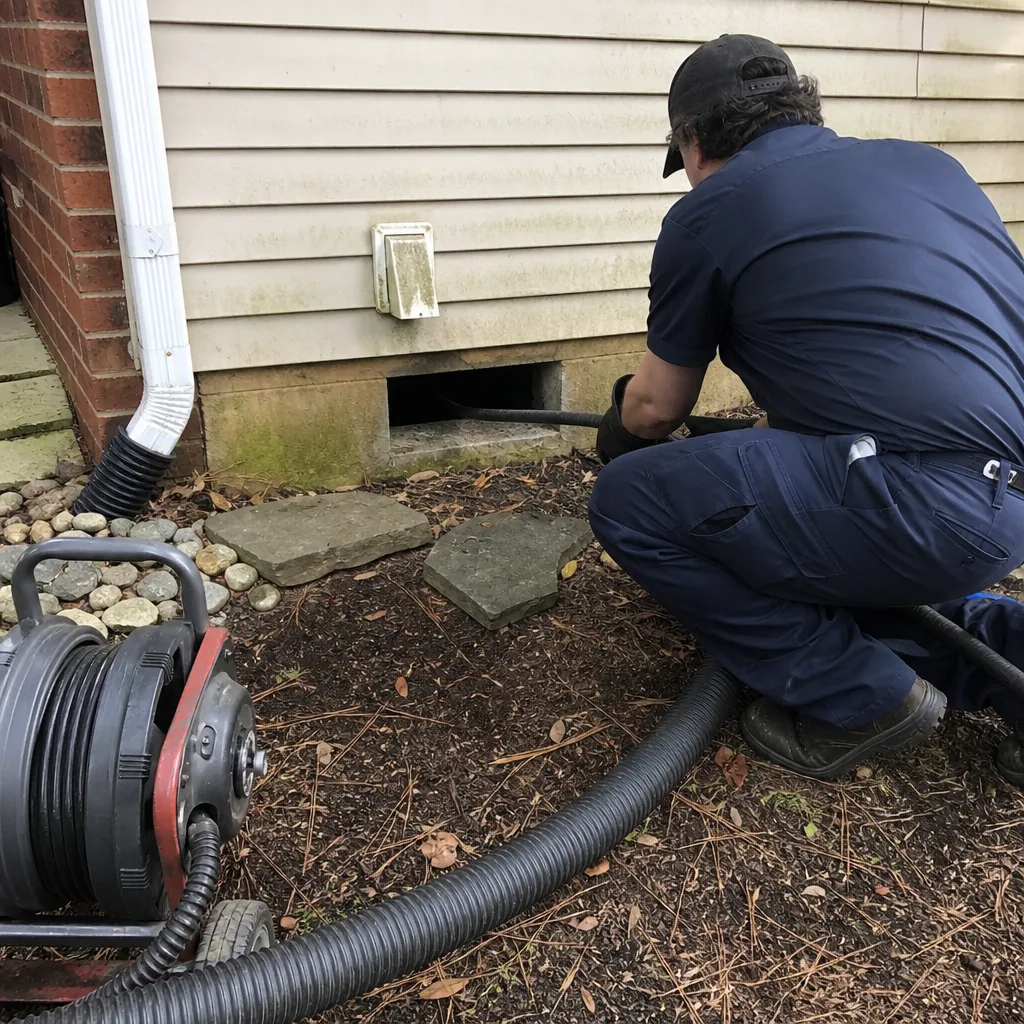 Before
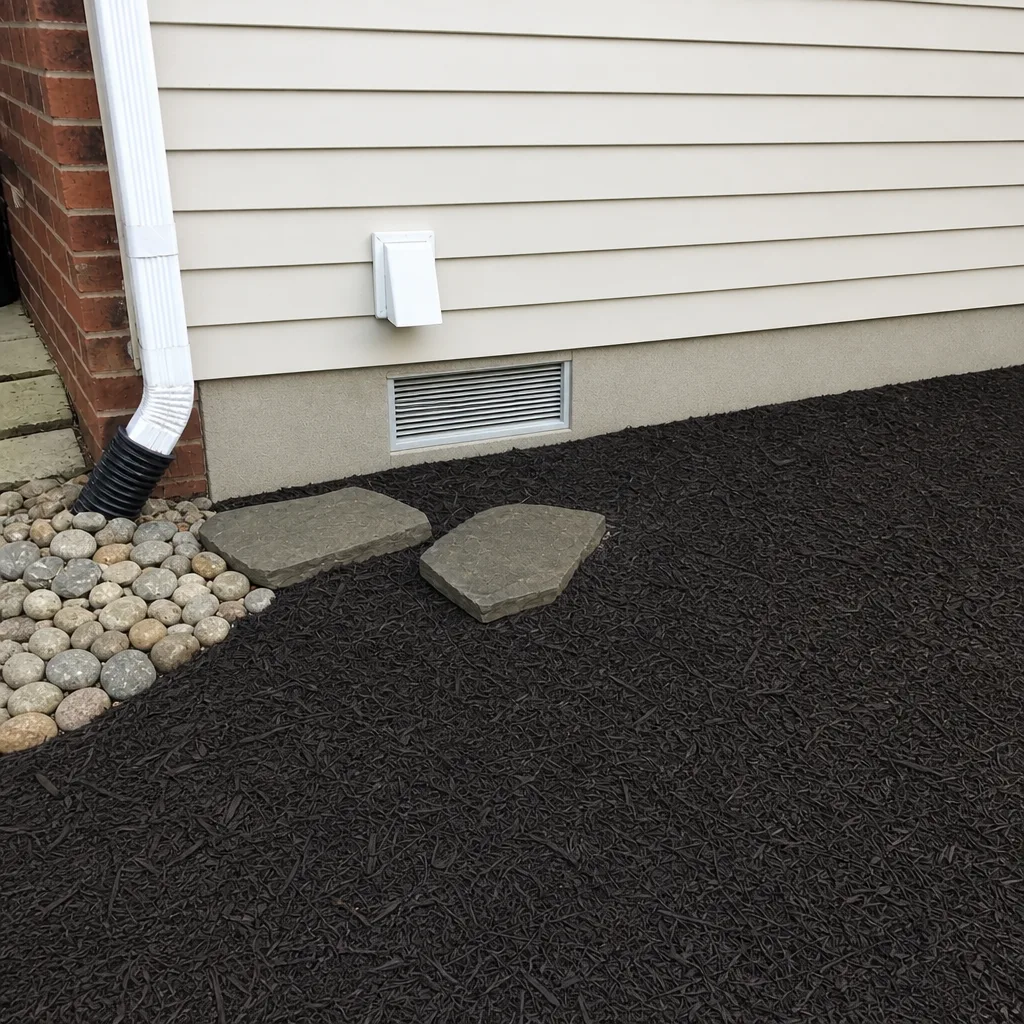 After
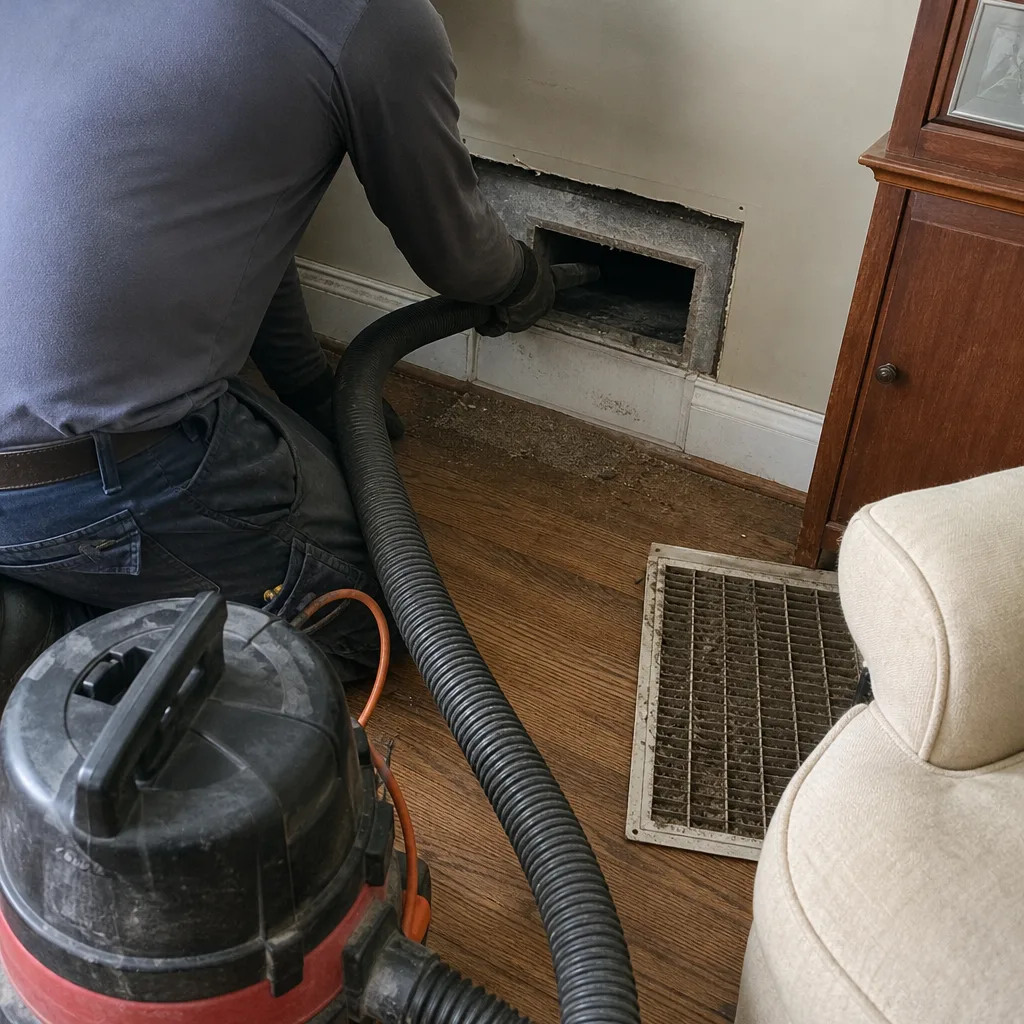 Before
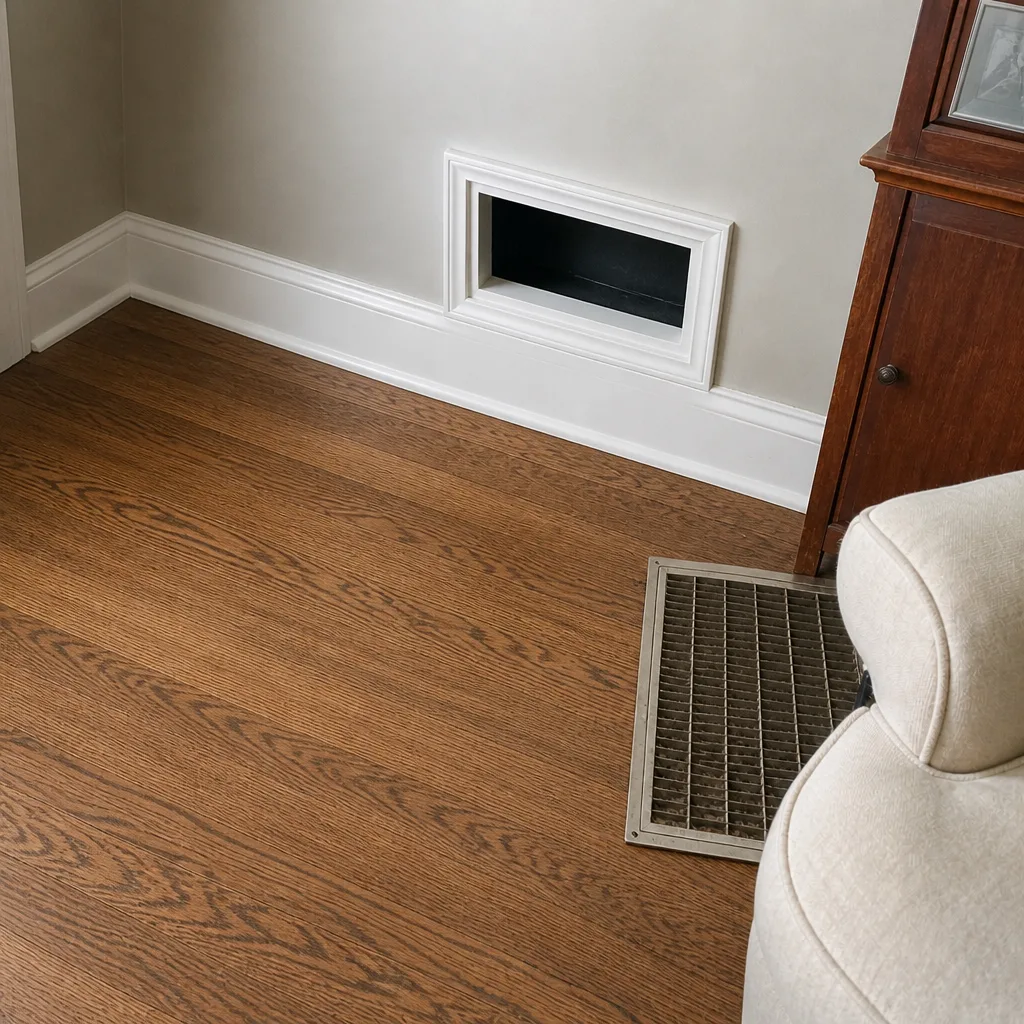 After
 Before
 After
Common Mistakes to Avoid
- Assuming every dust issue is a filter problem. A clogged filter restricts airflow, but it doesn’t cause streaks around register frames or dust that returns within weeks of replacement. If the pattern persists with a fresh filter, look at the duct system.
- Ignoring a new noise. A rattle that starts suddenly usually means a joint or support has failed. Waiting lets a small repair turn into a disconnected run and a much larger airflow problem.
- Cleaning without fixing the moisture source. If the smell is seasonal and tied to humid weather, cleaning the ducts without finding the moisture will not resolve it. The problem returns with the next humid stretch.
- Trusting a register-only visual inspection. What you can see at the grille is a fraction of what’s inside the system. A scope look at the trunk and air handler is what actually shows the condition.
- Overlooking abandoned original metal ductwork. In older Winston-Salem homes, flex duct run over the original metal creates a contamination trap that a standard cleaning won’t address. It’s worth asking the technician to check for it.
- Using a consumer vacuum or shop vac as a stand-in. These tools don’t have the volume or the mechanical agitation to clean duct interiors, and they can stir up contamination without removing it.
- Skipping the airflow comparison. Adjusting dampers or the thermostat to compensate for a cold room treats the symptom. The comparison test tells you where the actual restriction is, which is what a repair can fix.
When to Call a Professional
Call a professional when you have two or more of the signs above together, when a sound or temperature problem is new, when you see pest evidence or debris, or after a renovation that pulled construction dust into the system. Call sooner if a musty smell appears only in humid weather (that points to a moisture problem worth finding before it spreads), or if you live in an older home where the original metal ductwork may have been left in place under newer flex. For Winston-Salem homeowners who want a straight diagnosis before deciding what to do, Delmar Air Duct Cleaning offers free estimates in Winston-Salem. Call (844) 834-1338. We answer 24/7. Fast dispatch from 7am to 7pm, Sunday through Friday.
Frequently Asked Questions
Dust patterns on and around registers, musty odors that change with the season, rooms that stay unevenly warm or cool, new noises from the ductwork, and visible debris at vents are the most common signs. In older Winston-Salem homes, flex duct installed over abandoned original metal ductwork is a sixth sign worth checking. Call (844) 834-1338 for a free estimate.
Not usually. Dust evenly settled on a register is a symptom of airflow turbulence at the vent, while dust streaking around the register edges points to bypass leakage at the boot seal. Neither is a filter failure in most cases, and both tell a technician something specific about the duct system. Call (844) 834-1338 to have it looked at.
A musty smell that appears during humid weather usually points to a moisture source that’s active when the air is wet, such as condensation on cool duct surfaces in an unconditioned attic or damp insulation. A smell that hits in the first minute after startup and fades points to contamination inside the ducts instead. The fix is different for each, which is why the timing is worth noting. Call (844) 834-1338 to talk through what you’re noticing.
Run the airflow comparison described above. Hold a tissue near each register and compare how strongly it’s pushed. If the cold room lines up with a weak register, the duct is the issue. If every register feels weak, look at the filter, the air handler, or the main trunk. Call (844) 834-1338 if you want a professional reading of the results.
Rattling usually means a loose joint, a duct hanger that’s worked free, or a vibrating panel. Whistling points to a pressure problem, often an undersized run or a damper that’s choked down too far. A sudden new noise is the one to act on, because it usually means something has shifted. Call (844) 834-1338 to schedule an inspection.
When flex duct is run over or through the original metal ductwork and the metal is left in place, the gap between the two layers traps dust and debris where a standard cleaning can’t reach. This is common in homes that have been through multiple HVAC upgrades over the years. It’s worth asking about specifically when you call. Reach us at (844) 834-1338.
The Bottom Line
The signs your duct system gives you are specific and readable once you know what to look for. Dust on the register is not the same signal as dust streaking around it. A seasonal smell points to moisture, while a startup smell points to contamination. An uneven room temperature is a restriction signal. A new rattle is a joint that’s moved. And in older homes, abandoned metal ductwork under newer flex is a trap worth checking. Two or more of these together usually means a full-system look, not a single service. Our technicians have up to 13 years of experience reading these signals, and the visit starts with a diagnosis. If you’re seeing signs, call (844) 834-1338 for a free estimate.
Dryer vents deserve the same attention. Lint buildup behind a dryer is a fire risk many homeowners overlook, and it’s a separate service from duct cleaning. Learn more about dryer vent cleaning if your dryer is taking longer than it should to dry a load.
Written by the team at Delmar Air Duct Cleaning.