
Last updated November 14, 2026
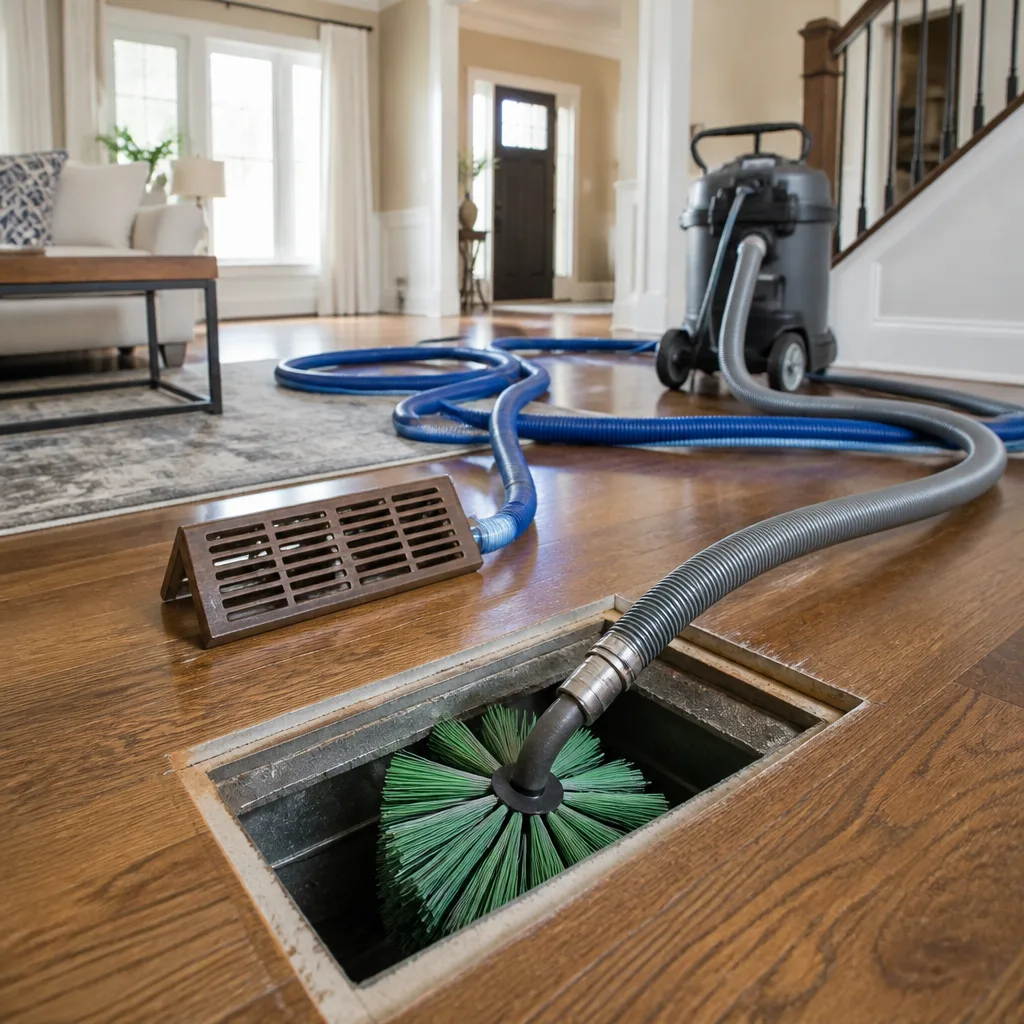 Whole-home duct cleaning
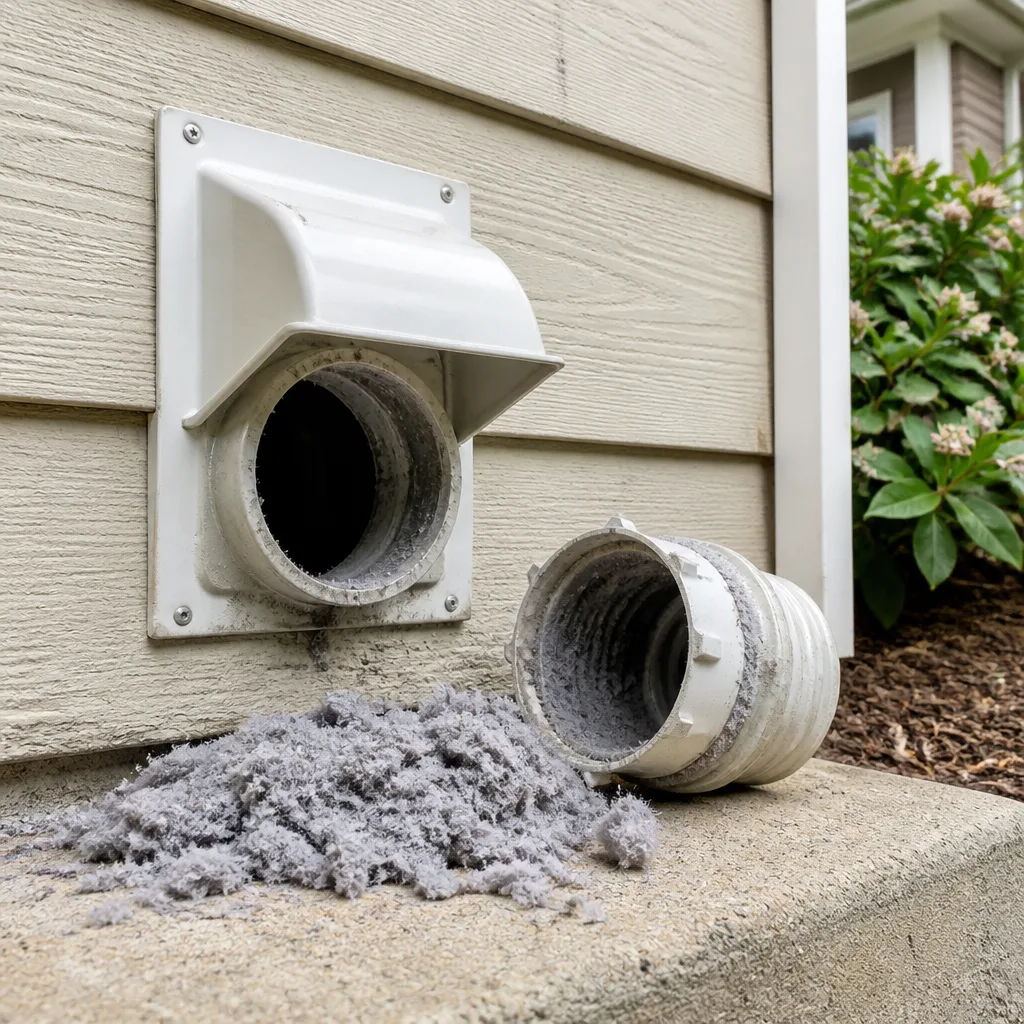 Dryer vent cleaning
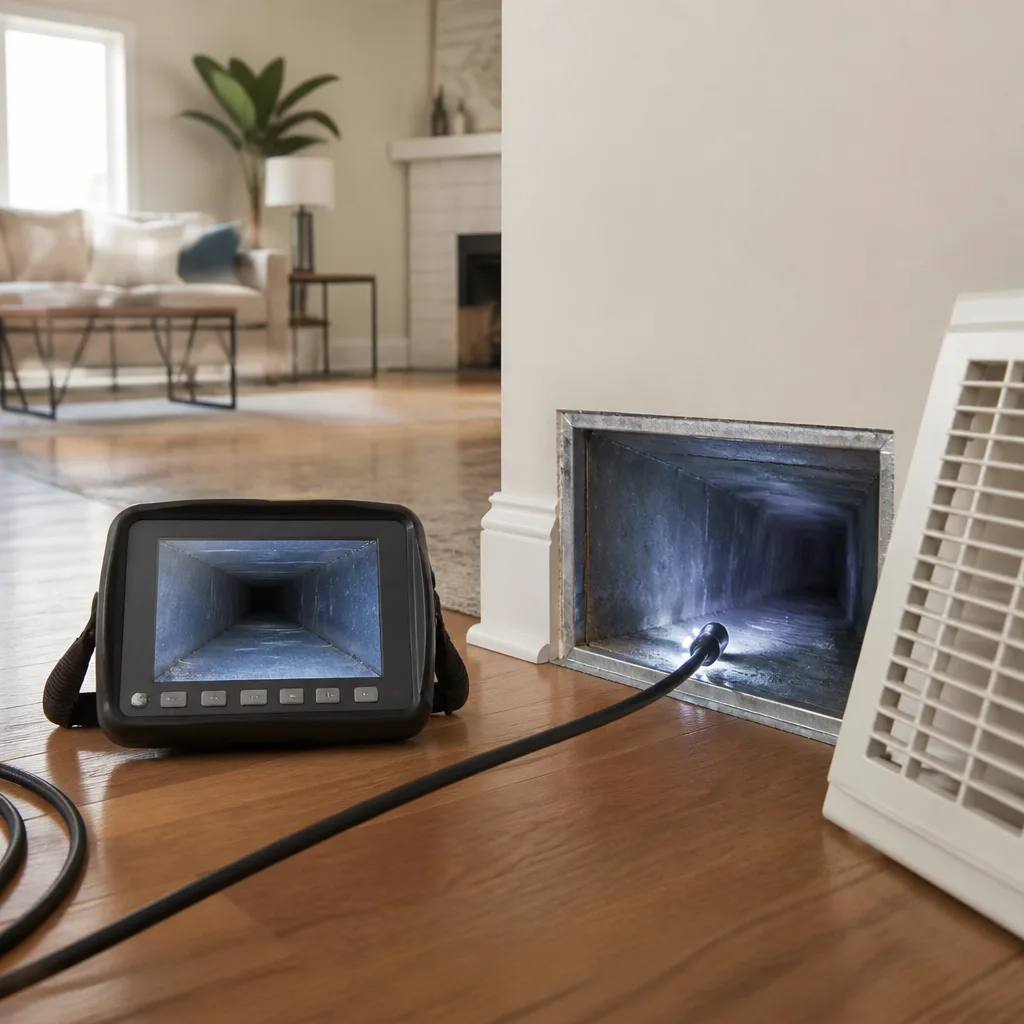 Camera inspection
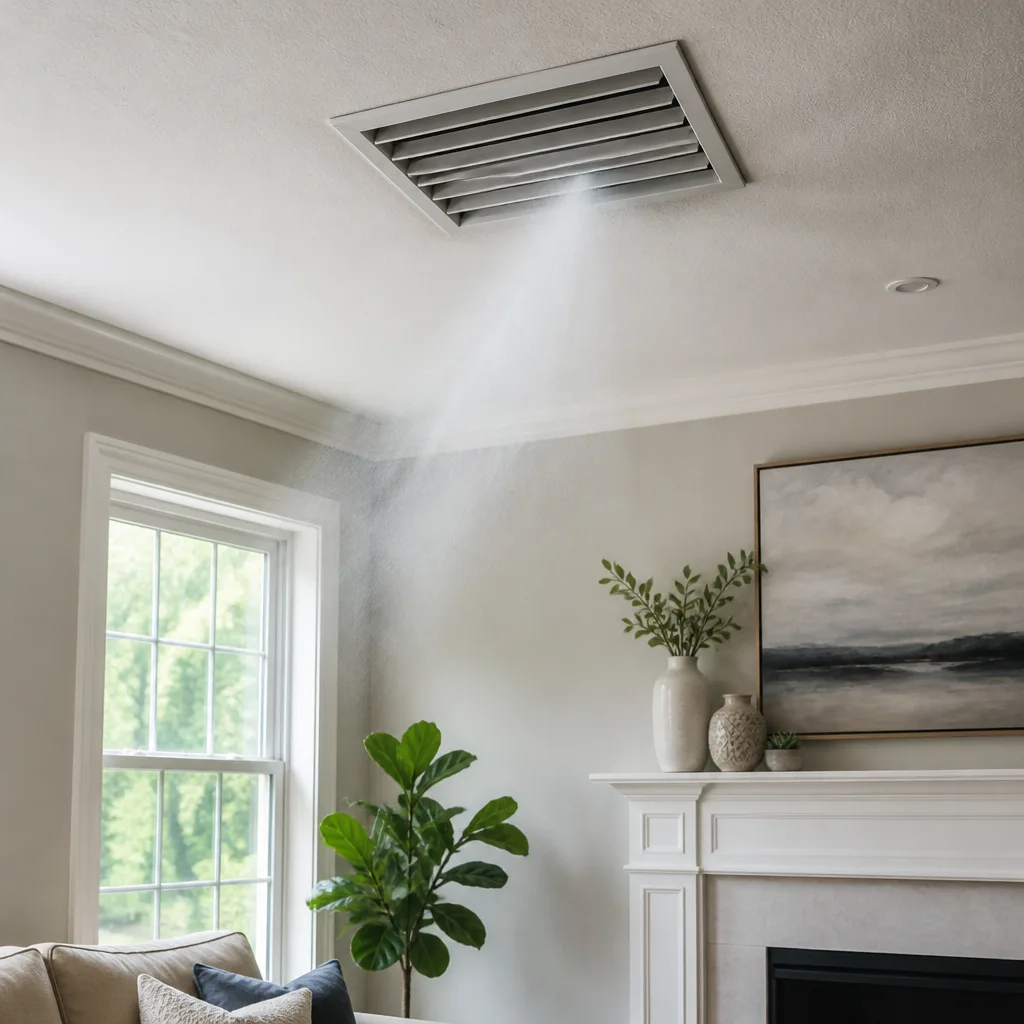 Sanitizing & deodorizing
Whole-system duct and dryer vent check with before-and-after photos - you see exactly what came out of your vents
That "$99 whole-house special" is a bait ad - the real number appears once they are in your hallway, or the "clean" is a shop-vac at the register. We photograph the inside of your ducts before and after instead.
Air Duct Cleaning Emergency Preparedness Guide for Winston-Salem Homes
Most homeowners think of a duct problem as a slow annoyance: dust on the vent cover, a faint musty smell, a dryer that needs two cycles. Then a storm hits, a crawl space takes on water, the power comes back, and they do the natural thing – they run the heat or AC to dry the house out. That’s the moment a manageable problem becomes a system-wide one. Standing water inside flex duct plus 48 hours of downtime is all it takes for mold to get a foothold, and running air through that duct spreads it into every room. This guide explains what a real duct emergency looks like in Winston-Salem, how to respond after a flood, fire, ice storm, or renovation, and what documentation to keep for an insurer. Read it before you need it.
Quick Answer
After a flood, fire, ice storm, or major renovation, treat your duct system as contaminated until a professional has inspected it. Shut down the HVAC if ducts were submerged, smoke-logged, or filled with construction debris, document the damage with photos and airflow readings, and book an inspection and cleaning before you restart the system. Running the equipment to “dry out” a flooded home pushes moisture and mold through every room.
Styles & brands we work with
- Whole-home duct cleaning
- Dryer vent cleaning
- Camera inspection
- Sanitizing & deodorizing
Table of Contents
- What Counts as a Duct Emergency in Winston-Salem?
- Post-Flood Duct Protocol: When to Run the HVAC and When to Shut It Off
- Fire and Smoke Damage: Why the HVAC Stops First
- Ice Storms and Power Outages: The Condensation Problem
- Renovation and Construction Duct Contamination
- Documenting Duct Damage for an Insurance Claim
- What a Professional Duct Assessment Looks Like
- Common Mistakes to Avoid
- When to Call a Professional
What Counts as a Duct Emergency in Winston-Salem?
A duct emergency is any event that introduces a contaminant into the duct system in quantities the filter and normal cleaning cycle can’t handle. That’s the working definition we use. Ordinary dust builds up over years. A contamination event dumps it in hours. The distinction matters because the response is different: a normal cleaning is scheduled, a contamination event needs assessment first and cleaning before the system goes back into service.
In Winston-Salem, these events cluster around a few recognizable causes. Heavy rain that floods crawl spaces and basements. Ice storms that knock out power for extended stretches. Structure fires and the smoke that travels through return ducts. Renovation projects where the HVAC stays running while walls come down. Each one brings a different contaminant – water and mold, combustion particulates, condensation, or drywall and insulation fibers – but the response rhythm is the same: stop, assess, clean, then restart.
A few signs tell you the situation is past a routine cleaning:
- Visible water, mud, or silt inside a duct or at a register
- A musty or smoke smell that gets stronger when the system runs
- Airflow that dropped sharply after an event
- Debris falling from supply registers
- Visible mold growth at a duct opening or on the air handler
If any of these appear, don’t run the system to “see if it clears up.” The system is the delivery mechanism, and every cycle pushes the contaminant further into rooms. This is where Delmar Air Duct Cleaning earns the call – a full-system assessment before anyone touches a thermostat.
Post-Flood Duct Protocol: When to Run the HVAC and When to Shut It Off
Here’s the rule: if water reached the ductwork, the HVAC stays off until the ducts have been inspected and cleaned. Floodwater carries silt, bacteria, and organic material. Flex duct that sits in standing water wicks moisture into its inner lining and insulation. Restart the system and you’re actively distributing that material into living spaces. The instinct to run the heat to dry the house out is the single most common mistake after a flood in Winston-Salem, and it’s the one that accelerates mold growth instead of preventing it.
Follow this sequence after a flood event:
- Kill the power to the HVAC at the breaker, not just at the thermostat. A system with water in the air handler or ducts shouldn’t cycle at all.
- Photograph everything – the water line on the duct, the crawl space, the register openings, the air handler. Before cleanup, always.
- Contact your insurer to open the claim and confirm what documentation they want.
- Book a professional duct assessment before restarting the system. They’ll open the system, check for standing water and mold, and decide whether the duct can be cleaned or needs replacement.
- Address the moisture source – repair the grading, the downspout, the sump pump, whatever let the water in – before the ducts go back into service.
If the ducts didn’t get wet, but the air handler did, the same shutdown applies. Water in an air handler is never safe to run. When water stayed out of the system entirely and only the surrounding space flooded, the assessment can happen quickly and the system can often go back into service after a clean.
If you’re looking for air duct cleaning after a flood, ask for the assessment first and the cleaning second. The order protects the home and the claim.
Fire and Smoke Damage: Why the HVAC Stops First
If there’s a fire in the home, the HVAC system should be shut down immediately, not after the fire department leaves. Combustion particulates are fine enough to travel through a return duct into the air handler and out through every supply register in the house. Smoke residue that sits on duct walls for a day or two bonds to the surface and becomes difficult to remove with standard cleaning. Give it a week and the smell is now part of the house.
The sequence after a structure fire looks like this:
- Shut down the HVAC the moment fire or smoke is in the home. This is a first-minute step, not a cleanup-day step.
- Close windows and doors after the fire department clears the scene, to prevent cross-drafts that push smoke into more rooms.
- Leave the system off until it’s inspected. Any cycle pushes soot further into the duct system and into living spaces.
- Document the duct system before cleaning starts, with photos from inside the ducts where possible, so the insurer has a baseline of what smoke did.
- Have the ducts cleaned and the air handler inspected before the system is restarted. If smoke reached the air handler, the unit needs its own attention.
Smoke jobs sometimes need containment. That’s where the Abatement Technologies equipment in our toolset matters – negative-air pressure and containment means the cleaning doesn’t redistribute ash and soot into the home. If a home in neighborhoods like Ardmore or West Salem has had a kitchen fire, the ducts and the air handler both need evaluation before anyone moves back in. Fire smell inside a duct system is a symptom, not a smell to mask with filters.
Ice Storms and Power Outages: The Condensation Problem
Ice storms in the Piedmont are rarely catastrophic, but they do knock out power for hours or longer, and the duct response isn’t obvious. When an HVAC system sits idle in a colder home, moisture can condense on duct surfaces and inside the air handler. When power comes back and the system restarts into a humid house – which is common right after a winter storm passes and the thaw sets in – that condensation has nowhere to go and the ducts are the wrong place to store it.
What to watch for after a long outage and a restart:
- A musty smell that appears within a few days of the power coming back on – a sign moisture is still inside the ducts
- Visible water staining at registers or on the air handler cabinet
- Reduced airflow that doesn’t improve after a filter change
- Rust or corrosion on metal duct seams
The prevention step is to change the filter before the first restart, watch the system for the first 24 hours, and call for an inspection if the smell or the airflow problem doesn’t clear. The spring thaw and humid summer that follow matter too – a duct system that took on condensation in January is a duct system that’s growing something by June. Winston-Salem summers carry plenty of humidity, and moisture that stayed in a duct during the cold months feeds off that.
Renovation and Construction Duct Contamination
The most preventable duct emergency in Winston-Salem homes has nothing to do with weather. It’s a renovation project where the HVAC runs while drywall goes up. Drywall dust is fine enough to pass a standard filter, and once inside the duct it coats the walls and settles at every joint. Insulation fibers from a wall opened up for electrical work behave the same way. Demolition debris – small pieces of wood, drywall, and glass fiber – can end up inside a supply run if an open duct isn’t capped during the tear-out.
The protocol for a renovation is simple:
- Seal every register and return with plastic and painter’s tape before demolition begins. Cap open duct ends, even in rooms that aren’t the focus of the project.
- Change the HVAC filter frequently during the project, at least weekly if dust is heavy, and keep a fresh filter in at the end.
- Don’t run the HVAC during heavy sanding or drywall if you can avoid it – especially the return side, which pulls air backward through every room.
- Book a post-project cleaning once the dust has settled – literally. Give the fine dust a day to fall and then have the ducts cleaned.
- Check the coil and blower too. Drywall dust coats the A-coil in a way that reduces efficiency and eventually ices the system.
Renovation dust in the ducts is why a professional-grade rotary brush matters more than a shop vac. The Delmar Air Duct Cleaning team uses the Rotobrush rotary brush system to agitate the dust off the duct walls, then extracts it with Nikro equipment. A consumer vacuum just stirs the problem.
Documenting Duct Damage for an Insurance Claim
When a covered loss damages the duct system, the quality of your documentation decides the claim. Insurers aren’t hostile – they just can’t pay for something that isn’t evidenced. Duct damage that’s photographed, measured, and professionally reported gets handled. Duct damage described over the phone doesn’t. This is the single most overlooked part of disaster recovery in Winston-Salem homes.
The documentation package that supports a duct claim includes:
- Photos before any cleanup – the water line on the crawl space, the duct visible in standing water, the smoke staining at registers, the register openings themselves
- Photos from inside the ducts, taken with a professional inspection camera, showing visible moisture, mold, soot, or debris
- Airflow readings at registers, taken before cleaning, to show a measurable change
- A written professional inspection report identifying the affected duct runs, the contaminant, and the recommended scope of work
- Before-and-after cleaning photos from inside the duct, once the work is done
- Invoices and receipts for the inspection and the cleaning, matched to the insurer’s claim line
Keep a copy of everything for yourself. Reimbursement disputes are easier to resolve with a complete file. If a contractor offers to clean your ducts “as a quick favor” without paperwork, that favor costs you the claim. A cleaning with documentation is worth more to you than a cleaning without.
What a Professional Duct Assessment Looks Like
A proper assessment is not a sales call. It’s an inspection of the system before any cleaning begins, and the output is a written recommendation. When Delmar Air Duct Cleaning arrives at a home in Winston-Salem, this is the sequence:
- Open the system at the air handler and at several register openings to get eyes on the interior
- Camera the trunk and main supply runs, checking for moisture, mold growth, blockages, and separated sections
- Take airflow readings at registers, before and after, to establish the baseline
- Inspect the air handler – coil, blower, filter housing – for contamination and water damage
- Check the return side separately, since the return pulls air backward and often shows the worst contamination
- Recommend repair alongside cleaning when seams, joints, or spans have been damaged – our Delmar Air Duct Cleaning team handles both, so a separated duct doesn’t turn into a second contractor
The written report tells you what the ducts are, what condition they’re in, and what the cleaning scope should be. If a company arrives and starts quoting a price before opening a single register, the assessment isn’t an assessment. It’s a pitch.
Common Mistakes to Avoid
- Running the HVAC to “dry out” a flooded house. The system pushes moisture and any mold growing in the ducts into every room. Shut the system down and have the ducts inspected first.
- Waiting to shut down the HVAC after a fire. Every minute the system runs after smoke has entered the home pushes soot further into the ducts. Shut it off as a first response, not a second thought.
- Skipping photos before cleanup. Insurers can only reimburse what they can see. Once the wet duct is pulled or the register is wiped, the evidence is gone. Photograph first.
- Running the HVAC during a renovation. Drywall dust enters the return side and coats the coil and blower. Seal the registers before the first swing of a hammer.
- Restarting after an ice-storm outage without a filter change. The filter traps moisture and dust that accumulated during the outage. Fresh filter, then restart, then a smell check in the following days.
- Accepting a cheap cleaning without an assessment. A low opening price on a post-disaster cleaning usually means the very investigation you need to satisfy an insurer gets skipped. The written scope is what protects the home and the claim.
- Assuming the ducts are fine because the system still runs. Airflow can drop 20 percent to 30 percent after a contamination event and the system still “works.” The airflow reading is the number to look at, not the thermostat.
When to Call a Professional
Call a professional duct service the moment any of these is true: water reached your ductwork or air handler; the home has had a fire or heavy smoke event; the power was out long enough that condensation formed inside the ducts and a musty smell appeared after restart; a renovation is wrapping up and drywall dust went into the return side; or you’re filing an insurance claim and need a written inspection report. Also call when a duct is visibly dislodged, a section of flex duct is separated at a joint, or the system isn’t delivering air to a room it used to serve. Delmar Air Duct Cleaning offers free estimates in Winston-Salem – call (844) 834-1338. We answer 24/7. Fast dispatch from 7am to 7pm, Sunday through Friday. Our technicians have up to 13 years of experience, and we carry the Rotobrush, Nikro, and Abatement Technologies equipment that post-disaster jobs actually require.
See the difference
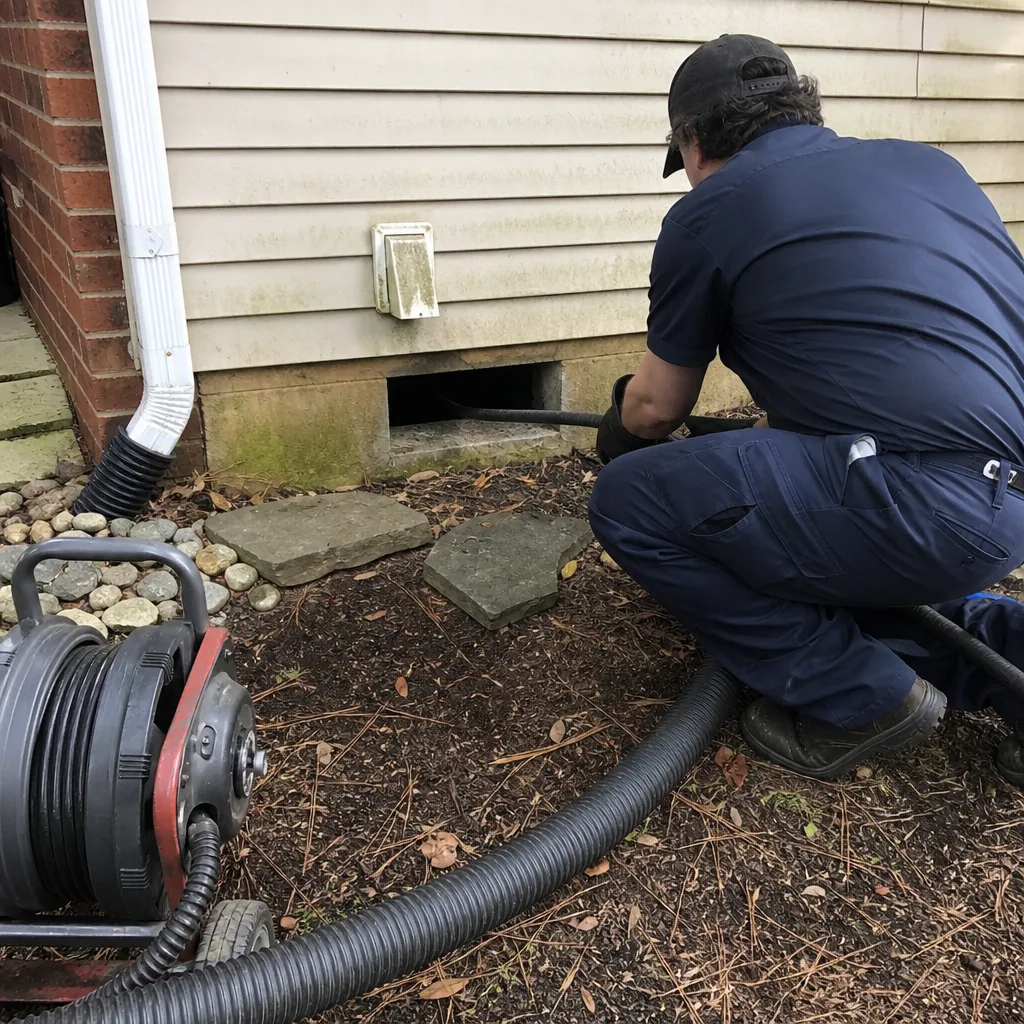 Before
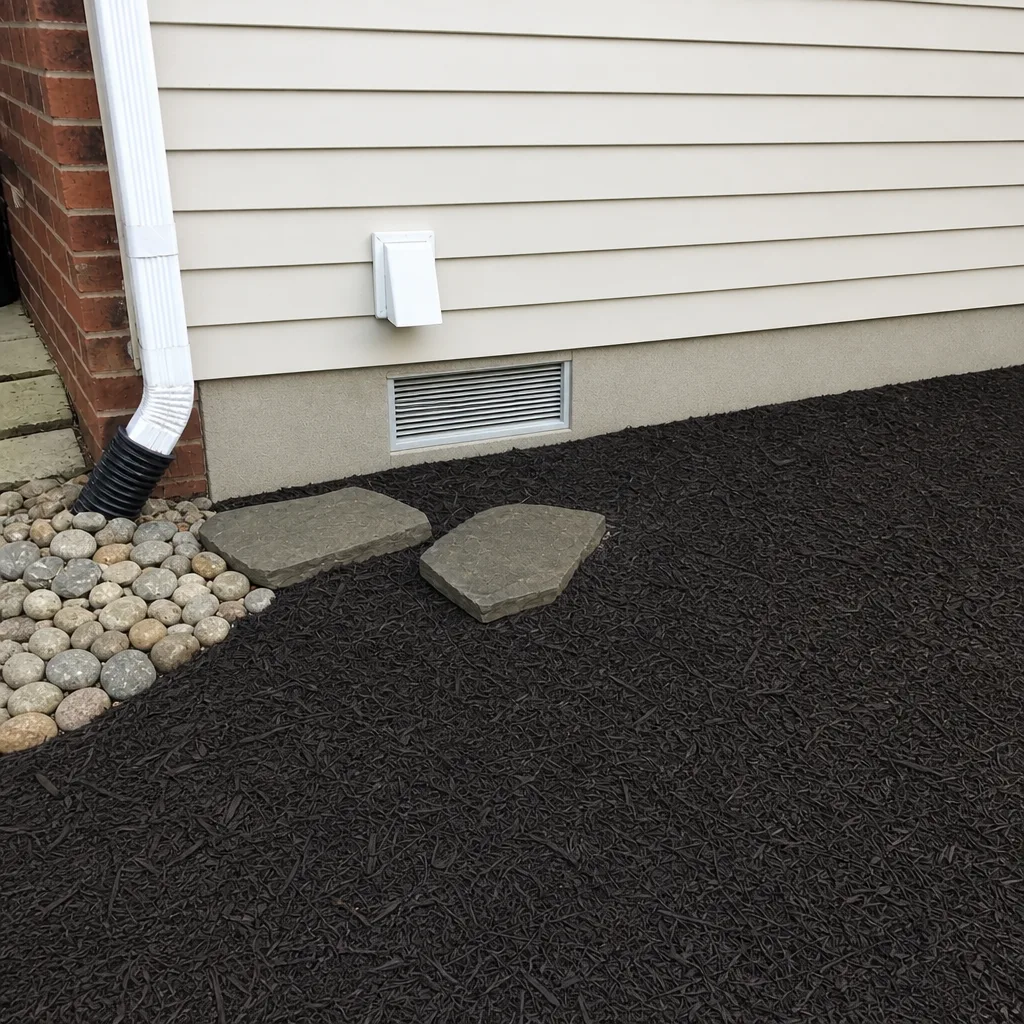 After
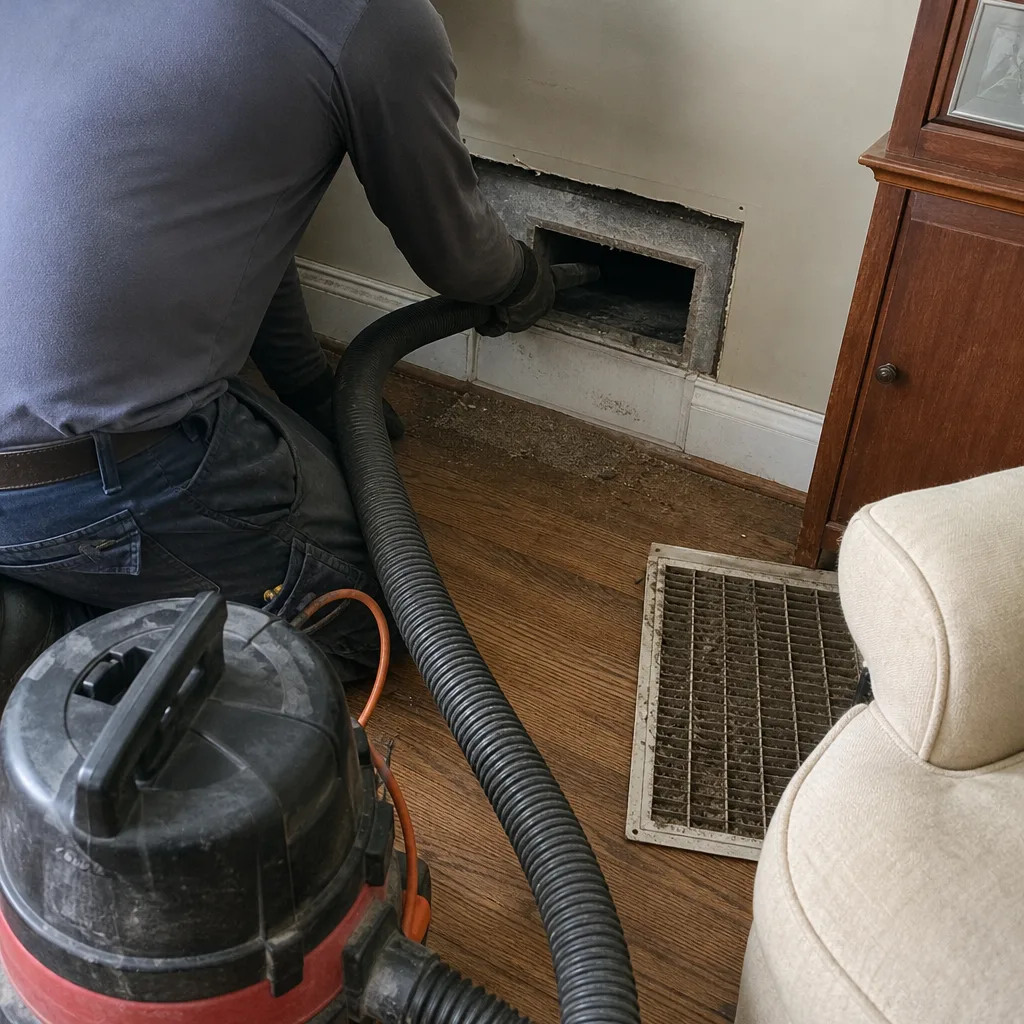 Before
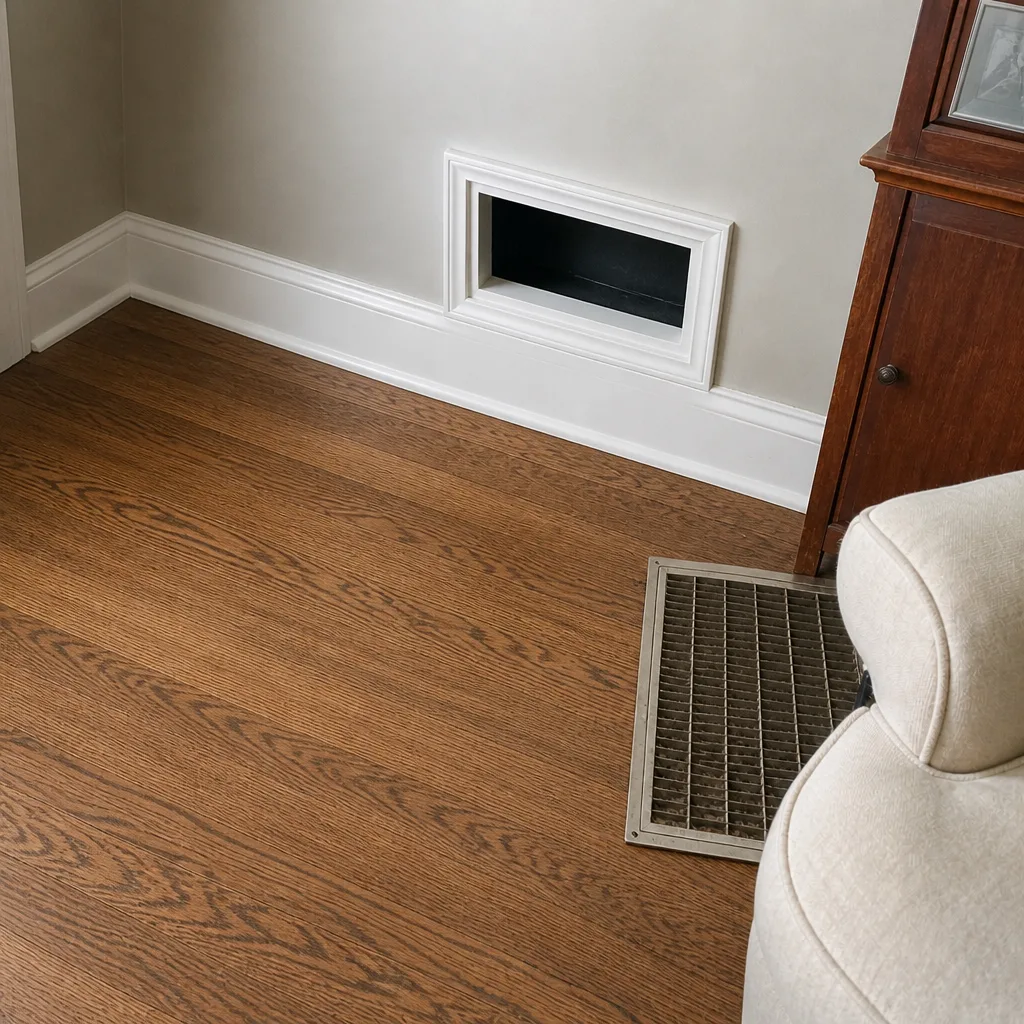 After
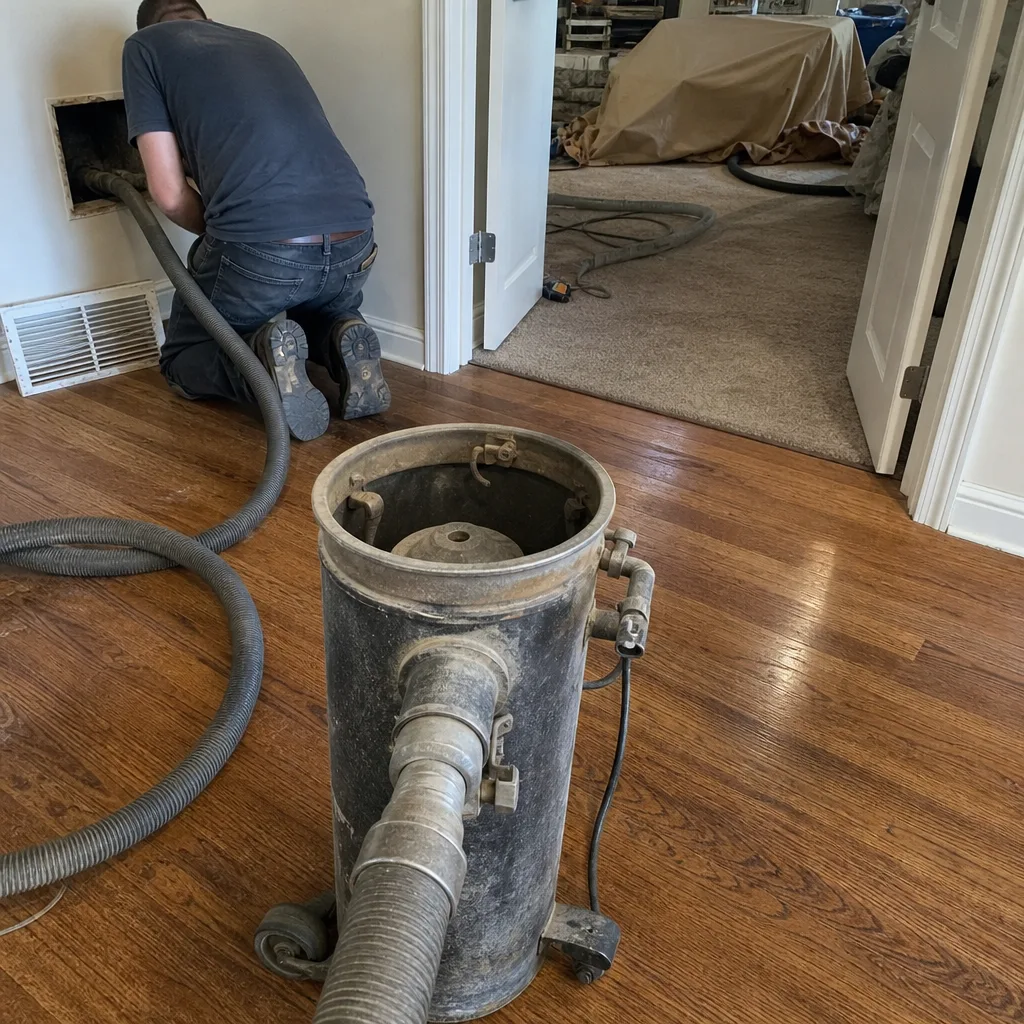 Before
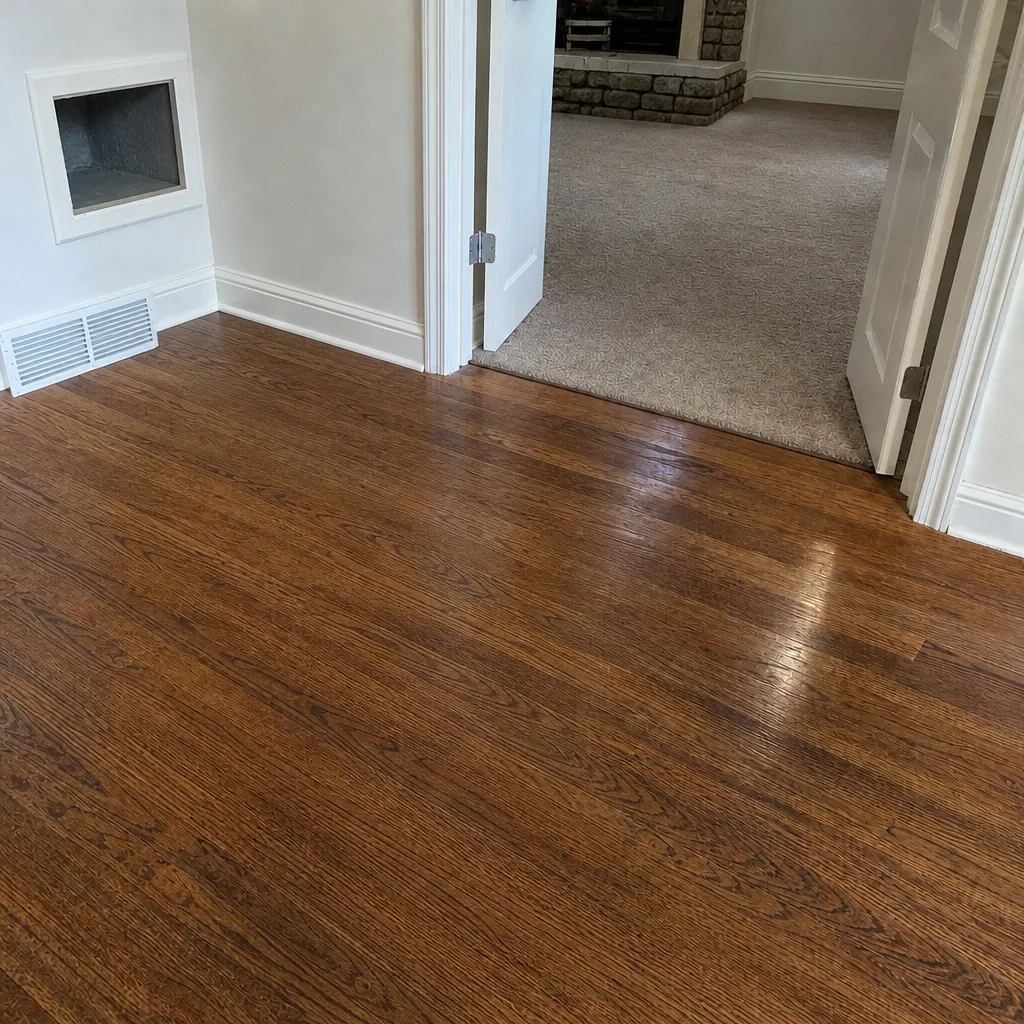 After
Frequently Asked Questions
No. If water reached the ductwork, the system stays off until a professional has inspected the ducts and either cleaned them or confirmed they can be cleaned. Floodwater carries silt, bacteria, and organic material, and flex duct wicks moisture into its lining. Running the system during this time distributes that material into every room. Kill power at the breaker, not just the thermostat, and book an assessment. Call (844) 834-1338 for a free estimate – we answer 24/7.
As soon as the fire department clears the property and the insurer has been notified, and before the HVAC is restarted. Smoke residue bonds to duct surfaces within a day or two, and the smell gets harder to remove with time. Have the ducts inspected and cleaned before the system runs again. If the insurer wants a professional report, we can provide one. Call (844) 834-1338 for a free estimate.
It depends on the size of the system, the number of duct runs, and the contaminant. Contamination events – water, smoke, or construction debris – cost more than a routine maintenance cleaning because they need assessment, sometimes containment, and before-and-after photographs for the insurer. There’s no honest single number. We give one flat price per system, agreed before work starts, no per-vent pricing, and you see before-and-after photos of your own ducts. Call (844) 834-1338 for an exact quote – estimates are free.
Often yes, if the loss itself is covered and the damage is documented. Duct cleaning tied to a covered water loss, fire, or storm damage is treated as part of the repair, while maintenance cleaning typically isn’t. The documentation package matters more than anything else: photos before cleanup, photos from inside the ducts, airflow readings, and a written professional report. Call us to schedule the assessment – (844) 834-1338.
Days, not weeks, and for a water event, hours. Moisture inside a duct plus a warm home is the perfect environment for mold growth, and that growth reaches a set point within roughly two days. Smoke residue bonds within a couple of days. Construction dust settles fast and gets pulled into the air handler with each cycle. The sooner the assessment, the smaller the job. Call (844) 834-1338 to book it now – we answer 24/7.
Do you also do dryer vent cleaning after a disaster?
Yes, and dryer vents are their own disaster-preparedness concern. A dryer vent compromised by floodwater, debris, or a long outage with lint buildup is a fire risk. We treat dryer vent cleaning as a standalone service because it’s distinct from the duct system and the fire risk is real. Call (844) 834-1338 for a free estimate on both.
The Bottom Line
Duct emergencies in Winston-Salem aren’t usually sudden – they’re the second act of a flood, a fire, an ice storm, or a renovation, and the response in the first hour decides how big the problem gets. Shut down the HVAC before the system distributes a contaminant. Photograph everything before cleanup. Get a professional assessment before deciding on cleaning or repair. Keep the written report and the before-and-after photos, because your insurer needs them. The rest of the year is a maintenance story. The emergency response is a documented sequence, and the homes that handle it well are the ones that ran the sequence instead of running the heat.
Delmar Air Duct Cleaning provides air duct cleaning, dryer vent cleaning, and air duct repair for homes and property managers across Winston-Salem. If a storm, fire, or renovation has put the duct system in question, call (844) 834-1338 for a free estimate. We answer 24/7. Fast dispatch from 7am to 7pm, Sunday through Friday.
Written by the team at Delmar Air Duct Cleaning.